
Saturday, June 7, 2014

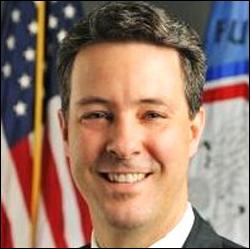
Koch City? (How PBS Lost the P and Gained (A Few Very Wealthy) Private Owners) A 6-Inch-Long Black Box Redaction of Everyone the Fed Chairman Spoke To or Met With (Regulator Was Dining and Schmoozing With Citi Execs) and Who Are Those Regulators Anyway? (It's A Very Exclusive Club and You're Not Admitted To Its Meetings)


The news isn't all bad.

Er, but wait.

Maybe not not.


BREAKING!

Bank of America Corp. BAC +0.71% is in talks to pay at least $12 billion to settle civil probes by the Justice Department and a number of states into the bank's alleged handling of shoddy mortgages, an amount that could raise the government tab for the bank's precrisis conduct to more than $18 billion, according to people familiar with the negotiations. . . . The North Carolina bank's total tab to end government probes and lawsuits related to its conduct in the runup to the financial crisis is increasingly likely to surpass the record $13 billion that J.P. Morgan Chase JPM +0.41% & Co. paid last year to settle similar allegations, these people said. Bank of America has already struck a $6 billion settlement, by the Justice Department's measure, with the Federal Housing Finance Agency.

. . . The sometimes creative terms of consumer relief mean the bank could find ways to lessen the actual cost of a settlement. For instance, in the J.P. Morgan settlement, the bank agreed to provide at least $1.2 billion in mortgage-principal reduction to customers — but for every dollar of principal reduction granted by the bank in the hardest-hit parts of the country, it will get $1.25 worth of credit toward the settlement. Depending on the details of which mortgages they target for principal reduction, the bank could boost that to as much as $1.43 toward the settlement cost.

Analysts at Sanford C. Bernstein & Co. calculate that Bank of America and its subsidiaries issued $965 billion in private-label, mortgage-backed securities between 2004 and 2008. J.P. Morgan and subsidiaries issued $450 billion.

A significant portion of Bank of America's mortgage-backed securities were made by Countrywide Financial Corp., which it bought in 2008. A major portion of J.P. Morgan's securities were issued by Bear Stearns and Washington Mutual. WMIH -1.08% J.P. Morgan purchased Bear Stearns Cos. and the banking operations of Washington Mutual Inc. in 2008.

Some investors weren't fazed by the size of the potential settlement.

Bill Smead, chief investment officer of Smead Capital Management in Seattle, which owns 2,625,338 Bank of America shares, said "it would only make sense that it would rival or exceed J.P. Morgan's."

"The bad news is all six to eight years old, and the good news is all in the future," he said. "As a long-term stockholder, that's what you want. You want the bad news to be backward-looking and the good news to be forward-looking."

Mr. Smead isn't planning on selling any of the stock his firm owns as a result of the negotiations and said he thought the $5 billion or more that could go toward consumer relief would help stimulate the economy.

_ _ _ _ _ _ _


Don't worry about BOA. They'll be fine. (Fine is, in fact, the word in today's banking criminality.)

You, on the other hand . . . .


Remember hearing about the rather suspicious-seeming cancellation by PBS of its long-planned video entitled "Citizen Koch?"

Here's a delineation of why it was created in the first place and how out of place it came to be on the now mainly Koch-funded PBS (not that the funding doesn't come from other sources as well, just that many little donors can't mke the noise that the bigtime guys do).

Remember when Dubya replaced the President of PBS with a radical conservative?

His actions provided the genesis of what has now become the latest-released movie in any town (and so much more). Is it any wonder that true PBS fans are not flocking to the donations window anymore?

. . . there’s the reason why we’re seeing “Citizen Koch” in theaters more than a year after its debut. Originally to be titled “Citizen Corp” and focused on the aftermath of the Supreme Court’s Citizens United ruling, which allowed virtually unlimited corporate spending on issue campaigns, Deal and Lessin’s movie was intended for PBS broadcast. But the independent production company ITVS, which is funded by public broadcasting money and supplies films for PBS’ “Independent Lens” series, pulled the plug on this project last year for reasons that remain murky. Or at least for reasons that those involved want to remain murky; as Jane Mayer’s New Yorker story about the whole affair suggested, if you follow the money it doesn’t look all that mysterious.

At some point, “Citizen Koch” acquired a new title to go along with its focus on the activities of right-wing energy billionaires Charles and David Koch, who bankrolled (Scott) Walker and a host of other extremist anti-labor Republicans during the 2010 and 2012 election cycles.
David Koch, interestingly enough, is a major donor to public television, and has given an estimated $23 million to PBS and its affiliates over the years. He’s a trustee of WGBH in Boston, and at the time of the “Citizen Koch” brouhaha also sat on the board of WNET in New York. (In fairness, Koch’s philanthropy is visible all over the place. On the day I wrote this story I walked past a New York subway ad for a performance at the David H. Koch Theater in Lincoln Center, home to the New York City Ballet.)
WNET president Neal Shapiro had already gone to extraordinary lengths to placate David Koch after he was unfavorably portrayed in “Park Avenue: Money, Power and the American Dream,” a film by Oscar-winning documentarian Alex Gibney that was broadcast in 2012.
Officials at ITVS have insisted that they pulled the funding for “Citizen Koch” essentially because they didn’t like the film, and not because they got leaned on by Shapiro or the Koch brothers or anybody else. Lessin and Deal saw it differently: “This wasn’t a failed negotiation or a divergence of visions; it was censorship, pure and simple. It’s the very thing our film is about – public servants bowing to pressures, direct or indirect, from high-dollar donors.”

. . . “what we may be dealing with here may be a form of self-censorship in which officials at ITVS, and maybe at WNET and PBS itself, become wary of the impact of another PBS-distributed film critical of a hugely wealthy and politically active trustee,” one who was reportedly contemplating “a new, very large gift” to public broadcasting . . . . He did not pause to inquire what the term “public broadcasting” means when it depends on the generosity of wealthy private individuals. Reading between the lines, it sounds as if PBS and/or WNET lost a whole bunch of money after the Gibney film, and were anxious to stop the bleeding.

. . . There are more than a few eye-opening moments: I had forgotten the improbable-but-true prank call in which a journalist posing as David Koch phones Scott Walker and discusses the possibility of planting “troublemakers” amid the pro-labor protesters at the Wisconsin Capitol building. It’s not exactly a revelation at this point that Teflon populists like Walker function in political terms as wholly owned subsidiaries of corporations and the ultra-rich, but it’s still disheartening to observe in action.
To me, the most interesting subject of “Citizen Koch” – one the movie never quite articulates – is the perversion of the Republican Party into a thoroughly duplicitous instrument of wealth.
Lessin and Deal spend considerable time in the homes of working-class white Wisconsinites who identify as Republican but felt bewildered and betrayed by Walker’s extreme union-busting tactics, which arguably had much less to do with budget-cutting than with breaking the political power of organized labor.
They also devote a seemingly inordinate amount of attention to Buddy Roemer, the former Louisiana governor who ran a brief and quixotic 2012 Republican presidential campaign that went nowhere. But there’s method to the madness: Roemer’s an appealingly crusty character who refused to take PAC money and ran as what might be called a Teddy Roosevelt Republican, opposed to corporate power and in favor of campaign-finance reform. (This isn’t in the movie, but he did a memorable walk-through of Zuccotti Park during the Occupy Wall Street heyday.)
Many of those Wisconsin small-town Republicans might have loved Roemer, if they’d ever gotten to hear about him. But his version of small-business libertarianism and individualism, once the philosophical bedrock of the GOP, is not permissible within that party today.
One could make the same criticism of the Democratic Party, albeit in a less exaggerated form. It’s increasingly a party of lifestyle liberalism and metropolitan cool: We’ll give you gay marriage if that’s what the brand requires, but Wall Street power and privilege is off limits.
That points toward the real issue behind the “Citizen Koch” saga as well as the movie itself. Whether you feel any sympathy for Buddy Roemer’s Republicanism is not the point. At least it possesses a certain ideological coherence, and is not rooted in a toxic combination of racial panic at the bottom and cancerous piles of money at the top. For all the overheated partisan rhetoric of Washington, we only have the simulacrum of political debate in America, and hardly ever the real thing.
Political debate only happens behind closed doors, where you and I aren’t invited, and anyone who brings up this obvious fact must be exiled or marginalized.

And you know how "regular" Americans hate "cool" or political debates.


If you haven't had a chance to read Tim Geithner's new book yet, you may want to get some background on it first.

I'm a fan of Wall Street on Parade. Go figure.

Too bad they weren't in the reporting biz before 2008.


Fed Chair Bernanke Held 84 Secret Meetings in the Lead Up to the Wall Street Collapse


By Pam Martens and Russ Martens

March 10, 2014


The Federal Reserve Building in Washington, D.C.


It’s been over five years since the collapse of iconic Wall Street firms such as Bear Stearns and Lehman Brothers; the insolvency and bailout of AIG and Citigroup; the receivership of Fannie Mae and Freddie Mac; the shotgun marriage of Bank of America and Merrill Lynch. After a 5-year delay, the Federal Reserve has released the full transcripts of its meetings in 2007 and 2008 – the two key years of the crisis. But for unexplained reasons, the Fed Chairman, Ben Bernanke continues to redact 84 meetings from his appointment calendar that occurred between January 1, 2007 and the pivotal collapse of Bear Stearns on the weekend of March 15-16, 2008.

At first blush, one might think that Bernanke is attempting to protect the image of the Chairman of the Federal Reserve Board of Governors as independent of any political influence or business lobbying. But the mystery of these redactions is deepened by the fact that Bernanke has no problem listing meetings with President Obama, specific members of Congress, representatives of the Bank of England, every major CEO of a Wall Street firm, titans of industry like the heads of Ford Motor, IBM, and British Petroleum, quasi lobbyists like the U.S. Chamber of Commerce. Even the Reverend Jesse Jackson of RainbowPUSH Coalition is listed as meeting with Bernanke.

So just who is left whose identify needs to be secreted away for more than five years? One meeting on Tuesday, September 25, 2007 is so secret that both the meeting participant(s) and the location are redacted.

A careful study of where the most heavy concentration of redactions occur suggests two things: (1) Bernanke does not want the public to know that the Fed knew that Citigroup was in severe crisis months before the public became aware and (2) the Fed Chair’s participation in efforts to save Bear Stearns from a bankruptcy filing was more involved than presently known.

As we detailed last week, long before Congress approved and President Bush signed into law the Troubled Asset Relief Program on October 3, 2008, Citigroup had gotten customized relief from the Federal Reserve. For example, on August 20, 2007, the Fed granted Citigroup an exemption that would allow it to funnel up to $25 billion from its FDIC insured depository bank to mortgage-backed securities speculators at its broker-dealer unit.  The Fed notes in this letter that the bank “is well capitalized,” a statement that has been called into serious question in hindsight. (Federal Reserve Exemption to Citigroup to Loan to Its Broker-Dealer, August 20, 2007)
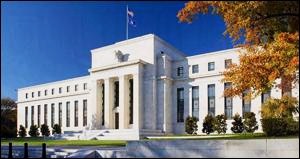
But on-the-record calls and meetings between Bernanke and Citigroup officials are scant between its obvious cries for help in August of 2007 and its massive bailout in the fall of 2008, suggesting strongly that many of these redacted meetings occurred with Citigroup executives and personnel.
Then there is the matter of the bank run on Bear Stearns beginning on Monday, March 10, 2008. News and book accounts have put Tim Geithner, President of the New York Fed at the time, as the point man at the Fed during this period of crisis.
But Bernanke’s appointment calendar suggests two things: (1) that the depth of the crisis began on Friday, March 7, 2008 and (2) that Bernanke played a far greater role than previously known.
Bernanke’s calendar for March 7, 2008 shows a full day of appointments blacked out. On Saturday, March 8, Bernanke has an anonymous conference call with unnamed parties. At 11 a.m. the following Monday, March 10, he has a redacted meeting in his office from 11 a.m. to 12 noon. At 2:30 p.m. Bernanke has an unprecedented meeting with Walter Lukken, the Acting Chairman of the Commodity Futures Trading Commission, its Chief of Staff, three of its attorneys, its Director of Market Oversight and the Deputy Director for Market Surveillance.
We’re going to theorize that this meeting might have had something to do with shorting, and potentially naked shorting in the futures market. But Bernanke did not, according to the record, take any of his Fed experts with him. His calendar shows that he went alone to the CFTC offices at Three Lafayette Center in Washington, D.C.
This meeting was followed by a secret meeting from 5 to 6 p.m. in Bernanke’s office with unnamed parties. Beginning at 7:15 p.m. that evening, Bernanke held a 90-minute videoconference with unnamed parties.
The next day, Tuesday, March 11, Bernanke traveled to New York to meet with an interesting assortment of Wall Street CEOs and hedge fund honchos in the dining room at the New York Fed. Robert Rubin of Citigroup was there as was Lloyd Blankfein of Goldman Sachs, Jamie Dimon of JPMorgan, John Thain of Merrill Lynch and James Gorman of Morgan Stanley. Staff of the New York Fed attended, including Tim Geithner. Noticeably absent from the confab was any representative from Bear Stearns.
By Thursday, March 13, as a full blown run on the liquidity of Bear Stearns took place, there is a 6 inch long black box redaction of everyone the Fed Chairman spoke to or met with from 4:30 p.m. that day.
What we do know is that sometime between Thursday evening and Friday morning, the Fed and JPMorgan hatched a plan to inject liquidity backstopped by the Fed into Bear Stearns. An announcement of the plan to the press early Friday morning was meant to stabilize things. Instead, the stock of Bear Stearns dropped 46 percent that day. By Sunday night, JPMorgan had agreed to take over Bear Stearns with billions in backstop guarantees from the Fed.
Bernanke is now said to be auctioning off his memoirs using the same Washington attorney, Robert Barnett, who landed an $8 million deal for former Fed Chairman Alan Greenspan.
These 84 secret meetings may boost that price. Unfortunately for the American people, what men on the payroll of the U.S. government, earning $199,700 a year and a pension, do during their workday is apparently off limits to public scrutiny.

After I became aware of Geithner's role in the theft from the public assets, I never watched the financial "news" again without the compulsion to throw up.

Another red flag with Geithner, according to Bair, was his proposal for the FDIC to provide all-out support to Citigroup, guaranteeing all of its debt, including its half trillion in foreign deposits.

And this is the guy Obama considers prime material for running the Fed. Ah! The value of that freshman Econ class!


As Citigroup Spun Toward Insolvency in ’07- ’08, Its Regulator Was Dining and Schmoozing With Citi Execs


By Pam Martens and Russ Martens

January 7, 2014


Timothy Geithner Is Sworn in as 75th U.S. Treasury Secretary As His Wife, Carole, Looks On

Before Timothy Geithner became the 75th Secretary of the U.S. Treasury in 2009, he served as the President of the Federal Reserve Bank of New York for five years. The New York Fed is one of Wall Street’s primary regulators. But after leaving his post at the New York Fed, Geithner testified before the U.S. House of Representatives’ Committee on Financial Services on March 26, 2009 that he was not regulating Wall Street as he earned his $400,000 a year with car, driver and private dining room.
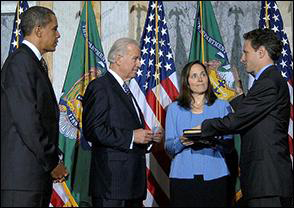
At the 2009 hearing, in response to a question from Congressman Ron Paul, Geithner said:
“That was a very thoughtful set of questions. I just want to correct one thing. I have never been a regulator, for better or worse. And I think you are right to say that we have to be very skeptical that regulation can solve all these problems. We have parts of the system which are overwhelmed by regulation … It wasn’t the absence of regulation that was a problem. It was, despite the presence of regulation, you got huge risks built up.”
When Geithner says, “for better or worse,” I think most Americans would agree that Geithner’s failure to know that he was a regulator at an institution he headed for half a decade that employed hundreds of bank examiners was probably worse for the country, not better, given that he oversaw the greatest financial collapse since the Great Depression and the most expensive taxpayer bailout in the history of finance.
In written testimony before the same hearing, Geithner added that “We can’t allow institutions to cherry pick among competing regulators, and shift risk to where it faces the lowest standards and constraints.” And yet, Geithner’s appointment calendar suggests that this is exactly what Citigroup did as Geithner accommodated it as willingly as a concierge at one of those exclusive Manhattan hotels.
According to Geithner’s appointment calendar for 2007 and 2008 (available online courtesy of an article the New York Times published in 2009), Geithner excelled in hobnobbing, despite the appearance of outrageous conflicts of interest. He was the Relationship Manager In Chief as he managed his own relationship with Citigroup into a job offer to be its CEO.
During 2007 and 2008, Citigroup entered an intractable death spiral owing to a decade of obscene executive pay, off balance sheet debt, toxic assets and mismanagement of its unwieldy disparate business lines. Instead of functioning as the tough cop on the beat in regulating Citigroup, Geithner hobnobbed, holding 29 breakfasts, lunches, dinners and other meetings with Citigroup executives.
When Sandy Weill stepped down from Citigroup in 2006, SEC filings show he still owned over 16.5 million shares of the company’s stock, in addition to the $264 million he had sold back to the company in 2003. As the company teetered toward insolvency in the 2007-2008 period, Weill had a vested interest not to see his stock position wiped out by a government receivership of Citigroup. The very last thing Geithner, as Citigroup’s regulator, should have been doing was meeting privately with Weill.
On January 25, 2007, Geithner not only hosted Weill to lunch at the New York Fed, but Geithner brought his teenage daughter to the lunch. Geithner’s appointment calendar shows Elise Geithner, his daughter, sharing his chauffeured car to work with her father and then joining him at lunch with Sandy Weill. In case you’re wondering, Take Your Daughters and Sons to Work Day was April 26 that year, not the day of this luncheon. A few months later, on May 17, 2007, Geithner joined Weill for breakfast at the expensive Four Seasons.
Another troubling aspect of Geithner’s obliviousness to the arms-length role expected of regulators and the firms they regulate. Geithner met privately, without other Fed staff, with top Citigroup execs and traveled to Citigroup’s corporate headquarters in Manhattan on most occasions to meet with them. His one on one meetings included Robert Rubin, former U.S. Treasury Secretary and Chair of the Citigroup Executive Committee; Charles “Chuck” Prince, CEO; Gary Crittenden, CFO (who would be later charged by the SEC for grossly understating Citigroup’s subprime exposure in October 2007); Sir Win Bischoff, Board Chairman; Vikram Pandit, who became CEO after the departure of Prince; Lewis Kaden, Vice Chairman; and Tom Maheras, co-head of Citigroup’s investment bank.
If Geithner did not believe he was a regulator, why was he meeting with these individuals on a private basis? Two troubling answers come readily to mind.

In an article by Jo Becker and Gretchen Morgenson published by the New York Times on April 26, 2009, Geithner admits that Sandy Weill spoke with him about becoming Citigroup’s CEO after Prince resigned following multi-billion dollar losses in late 2007. Were Geithner’s many trips to Citigroup actually job auditions? Geithner turned down the job offer and went on to become U.S. Treasury Secretary in 2009 where his advocacy for Citigroup’s survival played a far more important role than he could have as its CEO.
The other troubling possibility is that Geithner did not take other staff with him from the New York Fed because he was strategizing with Citigroup on how to resolve their massive financial problems. Indeed, on April 7, 2008, Geithner’s appointment calendar shows that a meeting was convened at the New York Fed and given the title: “Citigroup Strategy, Structure & Personnel Issues.” The meeting was attended by Geithner, Citigroup CEO Vikram Pandit, Citigroup Vice Chairman Lewis Kaden, and several staffers at the New York Fed. The meeting was held after hours, from 5:30 to 6:30 p.m.
Strategizing on a company’s structure and personnel issues does not sound like the job of a regulator but the job of a competent CEO and Board of Directors.

While all of this wining, dining and strategizing was going on between Geithner and Citigroup, the company was melting away and showing an insatiable appetite for taxpayer support. On October 28, 2008, Citigroup received $25 billion in Troubled Asset Relief Program (TARP) funds. On November 17, 2008, the company announced it was terminating 52,000 workers. Four days later, its stock closed at $3.77, a loss of 60 percent of its market value in one week. Its market cap was worth less than the government had invested just three weeks prior.
On November 23, 2008, Citigroup had to be completely propped up by the government with another TARP infusion of $20 billion and asset guarantees on $306 billion of securities held by Citigroup. In addition, by 2010, the Government Accountability Office would report that it had soaked up over $2 trillion in below market-rate loans from the bailout lending programs – most of which were operated by the New York Fed.
Geithner, who is . . . writing his own memoir on the era and has announced he is joining the Wall Street firm Warburg Pincus as President, was not held in high esteem in three major books written about his handling of the Wall Street crisis. In Ron Suskind’s Confidence Men, Geithner is said to have ignored a direct order from President Obama to wind down Citigroup. In Neil Barofsky’s Bailout, Geithner is portrayed as heartless in his assessment of the Home Affordable Modification Program (HAMP), viewing it as a way to “foam the runways” for the banks, slowing down the foreclosure stream so the banks could stay afloat, with no sincere intention of helping struggling families stay in their homes.
But no one was harsher on Geithner than former FDIC Chair during the crisis, Sheila Bair, in her book, Bull by the Horns. Bair believes that Citigroup’s two main regulators, John Dugan (a former bank lobbyist) at the Office of the Comptroller of the Currency and Geithner, as President of the New York Fed, were not being forthright on Citigroup’s real condition. In the book, Bair explains Citigroup’s situation in 2008 as follows:
“By November, the supposedly solvent Citi was back on the ropes, in need of another government handout. The market didn’t buy the OCC’s and NY Fed’s strategy of making it look as though Citi was as healthy as the other commercial banks. Citi had not had a profitable quarter since the second quarter of 2007. Its losses were not attributable to uncontrollable ‘market conditions’; they were attributable to weak management, high levels of leverage, and excessive risk taking.

It had major losses driven by their exposures to a virtual hit list of high-risk lending; subprime mortgages, ‘Alt-A’ mortgages, ‘designer’ credit cards, leveraged loans, and poorly underwritten commercial real estate. It had loaded up on exotic CDOs and auction-rate securities. It was taking losses on credit default swaps entered into with weak counterparties, and it had relied on unstable volatile funding – a lot of short-term loans and foreign deposits. If you wanted to make a definitive list of all the bad practices that had led to the crisis, all you had to do was look at Citi’s financial strategies … What’s more, virtually no meaningful supervisory measures had been taken against the bank by either the OCC or the NY Fed … Instead, the OCC and the NY Fed stood by as that sick bank continued to pay major dividends and pretended that it was healthy.”
Another red flag with Geithner, according to Bair, was his proposal for the FDIC to provide all out support to Citigroup, guaranteeing all of its debt, including its half trillion in foreign deposits.  Bair refused to permit this. With Geithner’s 29 meet-and-greets with Citigroup, one has to wonder just who whispered this idea into Geithner’s ear.
The FDIC did agree to guarantee Citigroup’s issuance of new debt, providing it was used for lending to help stimulate the economy. What the FDIC examiners found was that “Citi was using the program to pay dividends to preferred shareholders, to support its securities dealer operations, and, through accounting tricks, to make it look as if funds raised through TLGP [Temporary Liquidity Guarantee Program] debt were actually raising capital for Citi’s insured bank.”
Last October, Carmen Segarra, a bank examiner and lawyer employed at the New York Fed, filed a lawsuit alleging that Relationship Managers at the New York Fed attempted to intimidate her into changing her critical review of another Wall Street firm. When she refused, she says she was fired. There is now enough hard evidence to warrant a full scale Congressional investigation of the New York Fed’s fitness to continue as Wall Street’s regulator.

Fed Nominee Stanley Fischer Has a Citigroup Problem


By Pam Martens

March 4, 2014


Stanley Fischer, Former Vice Chairman of Citigroup, Nominated to Serve as Vice Chairman of the Federal Reserve Board of Governors

Last evening, the U.S. Senate Banking Committee made the unexpected announcement that it was postponing the confirmation hearing of Stanley Fischer to serve as Vice Chairman of the Federal Reserve Board of Governors. Two other Fed nominees were to be vetted today. The hearing had been scheduled for 10 a.m. this morning in the Dirksen Senate Office Building. No reason was given for the postponement.
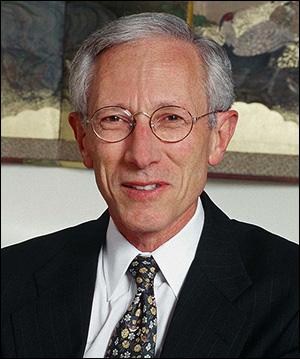
There are surely some veteran lawyers at the Securities and Exchange Commission (SEC) hoping the nomination of Fischer has been scuttled. The thought that Stanley Fischer, a former Vice Chairman of the serially corrupt Citigroup, could become Vice Chairman of the Federal Reserve, a regulator of mega banks like Citigroup, is not a source of comfort. Fischer was nominated for the post by President Obama, whose devotion to failing up on Wall Street regularly sets new heights.
As if as on cue, news broke just yesterday that Federal prosecutors have issued grand jury subpoenas to Citigroup in a money-laundering investigation, a topic with which the bank is intimately familiar.
During Fischer’s stint at Citigroup, from February 2002 through April 2005, he “amassed a personal fortune of between $14.6 million and $56.3 million” according to Bloomberg News. During that same period, Citigroup was repeatedly charged with fraud and embarked on its own exotic financial shenanigans that would end up collapsing the firm in 2008.
On April 28, 2003, the SEC charged that the investment banking business of Citigroup, Salomon Smith Barney, issued “fraudulent” research on telecommunications companies to promote its investment banking business. Jack Grubman, the company’s star telecom analyst, was the point man in the fraud according to the SEC and Citigroup rewarded him handsomely for it. The SEC noted in its complaint that “between 1999 and August 2002, when he left the firm, Grubman’s total compensation exceeded $67.5 million.”
Grubman was forced out of Citigroup in August 2002, while Fischer served on its Board. The New York Times noted dryly in an editorial at the time:
“Critics of Jack Grubman’s last deal, his $32 million severance package, are missing the big picture. Sure, most of the companies whose stock the fabled Wall Street telecom analyst bullishly plugged have gone bankrupt. But look at it this way: While investors lost $2 trillion in the implosion of the sector, his employer, Citigroup, made $1 billion in fees from the feverish dealmaking he helped arrange. It is no wonder the financial giant felt moved to show its appreciation, even as it forced him out.”
Exactly three months after the SEC’s complaint involving fraudulent research at Citigroup, the SEC charged Citigroup with aiding and abetting the Enron fraud, writing on July 28, 2003 that the company designed complex financial structures to help Enron “(1) inflate reported cash flow from operating activities; (2) underreport cash flow from financing activities; and (3) underreport debt.”
It should have been easy for any Wall Street regulator to deduce from Citigroup’s shady deals for Enron and Worldcom that it was highly likely it was not accurately reporting its own debt exposure. But that didn’t happen.
Citigroup collapsed in 2008 and is only alive today because the U.S. government pumped in $45 billion in equity, made $300 billion in asset guarantees, and the Fed chipped in over $2 trillion in below market rate loans to the listing shipwreck.
In August 2012, the law firm Kirby McInerney settled a shareholders’ lawsuit against Citigroup for $590 million. The 547-page amended complaint depicts a financial institution that gamed the system with high risk leverage, off-balance-sheet gambles it inevitably lost and dysfunctional checks and balances — all while its Board and regulators were asleep at the switch.

The lawyers at Kirby McInerney wrote:
“As plaintiffs’ investigation of Citigroup’s subprime CDOs [Collateralized Debt Obligations] demonstrates, Citigroup’s 2004-2007 subprime CDOs produced tens of billions of dollars of super senior tranches – and, effectively, Citigroup never sold (except with its money-back guarantees) a single one. The essence of an underwriter’s function is to sell the securities it underwrites. Citigroup’s inability/failure to accomplish any such sales was an alarming but unheeded red flag as to the value and liquidity of these instruments. The difficulty in selling these super senior tranches was of Citigroup’s own making: it had stripped yield from these super seniors in order to make the junior tranches more marketable. These super seniors thus became, effectively, all risk and no reward.”
During 2004 and 2005, Citigroup sold $25 billion of CDO commercial paper super senior tranches with a guarantee to repurchase them all, at full price, if collateral concerns ever disrupted the rollover of the commercial paper. In addition to a fee of $375 million for the underwriting, it received $50 million annually for that money-back guarantee. This permitted Citigroup to hide its exposure off its books while boosting revenues by $50 million a year.
In addition, Citigroup created seven off-balance-sheet Structured Investment Vehicles (SIVs), totaling $100 billion. Citigroup used “Enron-like accounting” to disclaim any exposure to the SIVs which did not appear in its public financial statements. This allowed the firm to avoid capital charges and reserves while enjoying income of at least $100 million per year from the SIVs.
The lawsuit noted that:
“In November and December 2007, Citigroup admitted that the purported ‘off balance sheet’ aspect of its SIVS was and had always been a fiction. With the stroke of a pen, approximately $50 billion of SIV liabilities (and the lesser value of the impaired assets purportedly collateralizing those liabilities) were transferred from ‘off’ Citigroup’s balance sheet to ‘on.’ Once there, they immediately degraded it. Citigroup’s capitalization was further weakened, its credit ratings were cut immediately, and billions of dollars of write-downs ensued.” Citigroup’s share price collapsed into the low single digits.
Sandy Weill, the Chairman and CEO who was at the helm of Citigroup when Fischer was there, stepped down as Chairman in 2006 after making over $1 billion in compensation during his tenure. Robert Rubin, former U.S. Treasury Secretary, who also served on Citigroup’s board, received over $120 million in compensation during his tenure from 1999 to 2009.
Fischer, who holds dual citizenship with Israel, is a former governor of the Bank of Israel. He served as First Deputy Managing Director of the International Monetary Fund from 1994 to 2001 and Chief Economist at the World Bank from 1988 to 1990. From 1973 to 1994 he taught economics at the Massachusetts Institute of Technology (MIT).

I wonder all the time how these men (mainly) can go home every night to their families with the burden on their psyches of what they spend the day ensuring.

And a not-the-last look at a topic that's been covered several times previously at your evil-eye Pottersville blog with very little analytical reporting other than this, without any truly illuminating international coverage since March.


A Closer Look at Young Worker Deaths at JPMorgan Chase


By Pam Martens and Russ Martens

March 3, 2014


In the past three months, at least eight JPMorgan Chase employees, aged 22 to 39, have passed away, including the three highly publicized, suspicious deaths of Gabriel Magee, Ryan Crane and a young man the media is now calling Dennis Li.

The eight deaths are likely a small fraction of the actual number of JPMorgan employees in this age cohort who died during December 2013 and January and February of this year. Wall Street On Parade was able to locate this small sampling from online funeral home notices in the U.S., thus the sampling does not include deaths where a notice was not posted online or deaths in the 59 foreign countries where JPMorgan Chase has employees, other than the death of Magee and Li which occurred in London and Hong Kong, respectively.

As detailed with names, ages and job titles below, one death of a 34-year old male was ruled a heart attack. (According to U.S. studies, heart attacks occur among people in their 30s at a rate of .5 percent — a rarity, whereas heart attacks among people aged 80 and older occur at a rate of 19.5 percent.) One 35-year old woman died of cancer. Two deaths, a 30-year old woman and a 34-year old male, did not list a cause and Wall Street On Parade was not able to locate a source to confirm the cause. [See updated information below.] A 22-year old male died from injuries sustained from a fall from a collapsing fourth-floor fire escape on an apartment building in Philadelphia. Ryan Crane, 37-years old, died at his home in Stamford, Connecticut. His death occurred exactly one month ago today and there is still no word from the Chief Medical Examiner as to the cause. Results are expected soon.

JPMorgan Chase employs 260,000 workers in 60 countries, including the United States. Obviously, there will be deaths among its workers and these should be consistent with statistics for the working population as a whole. Statistics that are inconsistent suggest one of two things: foul play or excessive stress in the workplace. That leads us to the deaths of Gabriel Magee and the man now identified as Dennis Li.

Magee, a happy, vibrant 39 year old technology Vice President, was purported by JPMorgan to have jumped from the 33-story rooftop of the firm’s European headquarters in the Canary Wharf section of London on January 28. Magee had emailed his girlfriend the evening before that he was wrapping up things at work and would be home shortly. When he did not arrive, she called the police and local hospitals. Magee’s body was found the next morning on a 9th-floor rooftop that juts out from the JPMorgan building and is accessible by stairs from the 8th level.

London newspapers initially reported as fact that thousands of commuters had seen Magee fall. The police have yet to identify even one witness who observed the fall. According to a police source, police responded at approximately 8:02 a.m. on January 28 after Magee’s colleagues looked out of their windows on upper floors, noticed the body and called the police. Iain Dey, Deputy Business Editor of the Sunday Times in London, appeared to confirm that view when he wrote: “Gabriel Magee’s body lay for several hours before it was found at 8am last Tuesday.” A coroner’s inquest to determine the cause of Magee’s death is scheduled for May 15.

Dennis Li’s (a/k/a Dennis Li Junjie, a/k/a Dennis Lee) fall from the 30-story Chater House in Hong Kong was equally suspicious. Days went by with newspapers attempting to guess the man’s name and job at JPMorgan. The South China Morning Post published three articles calling the man an “investment banker” and suggesting that the high pressure of this job may have led to the purported suicide. JPMorgan appeared to have given out the information that the man was an investment banker as New York Post reporter Michael Gray wrote that: “A 33-year-old JPMorgan investment banker leaped to his death Tuesday from the roof of the bank’s 30-story Hong Kong office, according to a bank spokesperson.”

An investment banker is indeed involved in a high-pressure job involving long hours. An investment banker puts deals together: mergers and acquisitions; initial public offerings of stocks; secondary offerings of stocks or bonds; or public financing, among other duties.
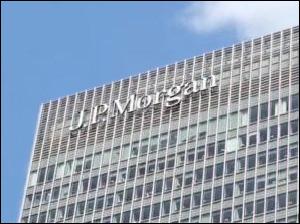
But according to The Standard newspaper in Hong Kong, Dennis Li was an accounting major who worked in the finance office at JPMorgan. (That’s about as remote from being an investment banker as one can get.) I emailed The Standard and asked the nature of their source. The English-language newspaper promptly responded indicating it was a police source.

The Standard’s police source appears to have been far more reliable than the South China Morning Post’s source or the initial JPMorgan source providing information to the New York Post. After many days of requesting the man’s name and job title from JPMorgan directly, on February 22 I received a response from Joe Evangelisti, a Managing Director and spokesperson for JPMorgan, who would only say: “Our HK team communicated with reporters late last week on this. Here’s the Bloomberg story.” The Bloomberg story confirmed that Li worked in the finance department. I asked Evangelisti for the actual news release from JPMorgan and received no response.

Since the South China Morning Post (SCMP) had spent days spinning a very different version of facts, Wall Street On Parade emailed Evangelisti and asked why he didn’t correct the story, writing:

“Have you asked the SCMP to correct their reporting? They’ve raised suicide fears in three articles in the minds of parents and wives married to investment bankers when this young man was an accountant.”

No response was forthcoming and the articles remain uncorrected.

Using data from the New York City Department of Health, the Wall Street Journal reported in 2010 that during 2008, the year that tens of thousands of Wall Street workers were fired and century old Wall Street firms collapsed, there were “473 people who committed suicide in the city in 2008, the most recent year for which statistics are available, 93, just under 20%, did so by leaping to their deaths.” This is in a city filled with skyscrapers similar to London and Hong Kong.

New York City, including its boroughs, has a population of approximately 8 million. The 93 deaths resulting from leaping from skyscrapers represents .000011625 of the population. That makes the two purported suicides within weeks of each other at JPMorgan Chase, with a workforce population of 260,000, a statistical improbability and worthy of a meaningful police or FBI investigation, given the ongoing criminal investigations involving JPMorgan in the Bernie Madoff matter, Libor and Foreign Exchange rate rigging.
————-
Timeline of JPMorgan worker deaths, ages 22 to 39, during December 2013, January and February 2014: 

Audrey Raishein Beale (Yon) died on December 4, 2013 at age 35 in Katy, Texas. Beale, according to her obituary, was employed as a certified senior underwriter at the Houston, Texas branch of the JPMorgan Chase Bank at the time of her death. Beale was reported to have died of cancer.

Joseph M. Ambrosio, age 34, of Sayreville, New Jersey, passed away on December 7, 2013 at Raritan Bay Medical Center, Perth Amboy, New Jersey. He was employed as a Financial Analyst for J.P. Morgan Chase in Menlo Park. The cause of death was not given. Update: On March 18, 2014, Wall Street On Parade learned from an immediate member of the family that Joseph M. Ambrosio died suddenly from Acute Respiratory Syndrome.

Jason Alan Salais, 34 years old, died December 15, 2013 outside a Walgreens in Pearland, Texas. A family member confirmed that the cause of death was a heart attack. According to the LinkedIn profile for Salais, he was engaged in Client Technology Service “L3 Operate Support” and previously “FXO Operate L2 Support” at JPMorgan. Prior to joining JPMorgan in 2008, Salais had worked as a Client Software Technician at SunGard and a UNIX Systems Analyst at Logix Communications.

Albert Suh, 22 years old, died on January 12, 2014. The police reported that emergency medical workers arrived at the John C. Bell apartment building in Philadelphia where a fire escape platform had collapsed with Suh and two female friends. Suh was taken to Hahnemann Hospital, where he was listed in critical condition. He was pronounced dead at 5:43 a.m. Sunday, January 12. The two friends were reported injured but to have survived. Suh’s LinkedIn profile shows that he worked as an Analyst at JPMorgan from June 2013 to his death in January. Prior to that he interned from June 2012 through August 2012 as an analyst at AXA Advisors.

Ashley Dawn Stone, 30, of DeBary, Florida, passed away Sunday, January 19, 2014, at St. Joseph’s Hospital in Tampa, Florida. Stone was employed by JP Morgan Chase Bank in Lake Mary, Florida. A cause of death was not listed. Update: On March 5, 2014 an immediate family member of Ashley Dawn Stone called Wall Street On Parade to advise that their loved one had died following heart surgery.

Gabriel Magee, 39, died on January 28, 2014. Magee was discovered at approximately 8:02 a.m. lying on a 9th level rooftop at the Canary Wharf European headquarters of JPMorgan Chase at 25 Bank Street, London. His specific area of specialty at JPMorgan was “Technical architecture oversight for planning, development, and operation of systems for fixed income securities and interest rate derivatives.”

Ryan Crane, age 37, died February 3, 2014, at his home in Stamford, Connecticut. The Chief Medical Examiner’s office is still in the process of determining a cause of death. Crane was an Executive Director involved in trading at JPMorgan’s New York office. Crane’s death on February 3 was not reported by any major media until February 13, ten days later, when Bloomberg News ran a brief story.

Dennis Li (Junjie), 33 years old, died February 18, 2014 as a result of a purported fall from the 30-story Chater House office building in Hong Kong where JPMorgan occupied the upper floors. Li is reported to have been an accounting major who worked in the finance department of the bank.

Related Articles:

A Rash of Deaths and a Missing Reporter — With Ties to Wall Street Investigations
Suspicious Death of JPMorgan Vice President, Gabriel Magee, Under Investigation in London 
JPMorgan Vice President’s Death in London Shines a Light on the Bank’s Close Ties to the CIA 
As Bank Deaths Continue to Shock, Documents Reveal JPMorgan Has Been Patenting Death Derivatives
JPMorgan and Madoff Were Facilitating Nesting Dolls-Style Frauds

Thursday, June 5, 2014

Jon Stewart's Versus Oliver North's Expertise? (You Be the Judge)


It doesn't get much better for those end-of-your-rope times than this, does it? (Okay, they could reinstitute the progressive tax rates before Reagan (or even Clinton), but I'm not holding my breath on that one.)

Daily Show host Jon Stewart sarcastically commended Fox News on Wednesday for inviting convicted felon and former Army Lt. Col. Oliver North to comment on the U.S. deal to free POW Bowe Bergdahl — especially when North’s “commentary” included him saying President Barack Obama should have covered up the whole affair.
“Finally, some practical advice from an informed voice on the right,” Stewart said. “You can overstep your authority, just lie the sh*t out of it afterwards.”

But Stewart reminded his audience that North, a former National Security Council member, gained his “hands-on terrorist-negotiating experience” by helping sell 200 missiles to Iran — in defiance of an arms embargo — in exchange for assistance in freeing seven U.S. prisoners in Lebanon. North then used that money to fund Nicaraguan “coke-fueled jungle death squads.”

The “tragedy” of the exchange of Bergdahl for five Taliban members, North told Fox, was that the deal became public knowledge.

“The reality is, they don’t talk about it,” North said, before referring to Obama. “Ronald Reagan didn’t, and this guy shouldn’t have done it.”

North also complained that, if a “ransom” was paid to Bergdahl’s captors, that it would be used to fund “a criminal enterprise that kills Americans.”

“So you’re saying it now like it’s a bad thing. Does this make you mad ’cause it’s gone mainstream?” Stewart responded. “‘I was into using American taxpayer money to arm terrorist groups way before it was cool.’”

Watch Jon Stewart here, friends.


Wednesday, June 4, 2014

High-Frequency Trading Goes Fairly To Highest Bidder? (After Charges of Running a Price-Fixing Cartel on Nasdaq in the 90s, Wall Street Banks Are Now Trading Their Own Stocks in Darkness)


And you thought the banks' behavior was going to improve after the fines?

Obviously the fines were just the opening shot in the new "fixed game for the banks" scheme.

It's a great deal.

Really.

They pay a percentage of their profits to the regularly outraged regulators, and commence to do it again.

But this time even bigger and more blatantly (and much darker).

Let's see them catch us now, they seem to be saying.

Doing god's work . . . .

Of course.

After reading Tim Geithner's self-serving (almost grandiose) verbiage about how they saved the market, I thought it would be useful if not just incredibly comic, to review the history of what happened before and after the epic financial disaster culminating in 2008 (we are still hoping).

It's like now that our money isn't worth much of anything anymore, we don't really mind that they continue to rip us off with wide-eyed understanding smiles (during "public" hearings).


Was That Really a Public Meeting on High-Frequency Trading?

By Pam Martens: June 4, 2014
Scott D. O'Malia, CFTC Commissioner
The regulator in charge of policing high-frequency trading in the futures markets, the Commodity Futures Trading Commission (CFTC), held a “public meeting” yesterday to determine if the allegations raised in the Michael Lewis book, Flash Boys, relating to high-frequency traders rigging the stock market might also be occurring in the futures markets.
As is increasingly typical of the U.S. markets themselves, the public was nowhere to be found at this “public meeting” yesterday. There was no one speaking on behalf of a consumer federation; no one speaking on behalf of disenfranchised small farmers who hedge their crops in these markets; no one speaking on behalf of the union employee or teacher or public municipal worker who is watching their retirement plan assets fleeced on millions of trades daily by high-frequency traders who have obtained a litany of high-speed perks, rebates and tricked up order types at U.S. exchanges.
What we heard were the overtly defensive voices of the executives from the two major futures exchanges and their very supportive staff. Based on missing coverage this morning in the media, it does not appear that any major business media turned out for this “public meeting” other than possibly the Financial Times which carried a brief mention.
One person whom the CFTC may have asked to stand in for the public was Joe Saluzzi, co-founder of Themis Trading and an expert on needed reforms in the area of high-frequency trading in the stock market. But because the stock market and futures market are vastly different animals, Saluzzi was decidedly a fish out of water at yesterday’s meeting.
CFTC Commissioner Scott D. O’Malia opened the meeting saying that “Michael Lewis’s book has stirred up quite a debate about high-frequency trading…” O’Malia said he wanted to “address these issues directly and have a frank discussion with all of you to understand how automated and high-frequency trading impacts derivatives markets.”
O’Malia said he had asked the panelists to address “fees and rebate programs, order types, and co-location policies.” Unfortunately, there was no frank discussion, whatsoever, on these critically problematic areas and that was because no one representing the public was present to press the panelists to come clean.
Bryan Durkin, Managing Director and Chief Operating Officer of the Chicago Mercantile Exchange Group (CME), which operates the largest futures market in the world, used the same subterfuge that his CME boss, Terrence Duffy, Executive Chairman and President of the CME Group, deployed before the U.S. Senate Agriculture Committee on May 13.
Duffy testified to the Senate Committee that “Our market data is sent to everyone at once. While customers have several options in terms of how they can receive data from us, we do not restrict access. Having multiple connectivity options makes our markets accessible to a broader array of participants.”
The speed at which traders receive their data from the CME depends on where the traders’ computers are located. Exchanges, including the CME, are now selling the right to locate one’s computers inside the exchange’s computer facilities (co-location) to gain a competitive edge over other slower traders. Duffy justified the practice as follows in his Senate testimony:
“Another service that CME Group provides to the marketplace is co-location. The criticism of co-location in some of the public coverage of this issue has failed to recognize that co-location actually equalizes access to the benefits of speed through proximity. It used to be that the benefit of speed from proximity was available only to traders who could buy real estate near an exchange, or where he or she thought the server would be… Everyone in our facility connects with the same length wire, so there are no unequal location advantages. This is one of the true benefits of our co-location services.”
What the CME refuses to talk about is its discriminatory pricing practices which constitute the core of the debate. CME’s co-location pricing plan is available at this link. It shows an eight-tiered market based on the participant’s ability to pay CME $144,000 a year for super-fast speed declining to $6,000 a year at the bottom rung of the speed chain. Each higher rung of the pricey chain is permitting the fleecing of the slower traders on the lower, cheaper rungs.
Because exchanges in the United States are permitted to function as self-regulatory bodies, they are mandated under law to provide a level playing field to all comers.
Another subject discussed by Duffy before the U.S. Senate came up yesterday. Senator Sherrod Brown had probed Duffy on high-frequency traders getting ahead of other participants by receiving confirmations of their own trades which are not recorded on the CME’s data feed until later.
Senator Brown:  “As we know the world of high-speed trading time is measured in microseconds (millionths of a second) or milliseconds (thousandths of a second)… The Wall Street Journal highlighted ‘order latency’ when trade information is routed to the parties to a trade before they post to the rest of the market.

This informational advantage, if you will, allows high-speed trading firms to see which way prices are heading, as you know, and trade ahead of the rest of the market on a different futures exchange, exploiting arbitrage opportunities in mere milliseconds.”
Duffy had responded to that charge as follows:
Duffy:  “All of our market data comes out of one pipe sir. And then the way you decide to acquire that is up to you. So there’s multiple ways to receive market data. So it does go out all at once. What you’re referring to, I believe, in the Wall Street Journal article that was written over a year and a half ago is where a participant would receive his confirmation of a trade but the market data did not hit the tape yet. So he knew he had the trade, he was the only one who knew he had the trade, the rest of the world didn’t know he had the trade yet. That was what the Wall Street Journal article cited. We have shrunk that latency dramatically about market data to market confirmation.”
Yesterday, the CME hauled in one of its staffers to discuss the trade confirmation issue. The presentation was so convoluted it clarified absolutely nothing.
One piece of big news did come out of the hearing:  according to the CFTC, the futures exchanges have increased the “incentive” programs they offer to various market participants and high-frequency traders from 56 to 340 programs. But, again, the public was left in the dark at this meeting about what these incentive programs actually do.
Wall Street On Parade located one incentive program which was submitted to the CFTC by CME on May 15 of this year. The program, which started on March 14, 2011 was being revised to extend to June 30, 2015. Below are excerpts of the plan:
The purpose of this Program is to incent(ivize) market makers to enhance liquidity in the products listed below. The resulting increase in central limit order book liquidity on the CME Globex® Platform benefits all participants segments in the market.
Product Scope
CME E-Mini S&P Select Sector Index futures products traded on Globex® (‘Products’).
Volume Commitment. CME may terminate a Tier 1 Market Maker if it fails to account for at least five percent (5%) of aggregate electronic volume in the Products on a monthly basis.
Tier 1: Fee Waivers. CME Clearing and CME Globex fees waived for all Tier 1 Market Makers in the Program. Performance Stipend. Tier 1 Market Makers will receive a monthly stipend for performing their obligations.
Tier 2:  Fee Waivers. CME Clearing and CME Globex fees waived for all Tier 2 Market Makers in the Program.
Tier 1 and 2: Incentive Pool. During each full month of participation in the Program, Tier 1 and Tier 2 participants may be eligible to participant in a predetermined incentive pool.
As Wall Street On Parade has suggested previously, if Congress genuinely hopes to get at the facts and the truth about our rigged markets, and convey the information to the public in language it can understand, both the Senate and the House must hire a Special Counsel who knows how to speak in plain language and has a deep background in the securities and futures markets to conduct its public hearings. The Senate appointed Ferdinand Pecora to do the job after the 1929 crash and ensuing Great Depression. Pecora issued subpoenas and demanded testimony under oath for two years. It’s well past the time to start this process.


After Charges of Running a Price Fixing Cartel on Nasdaq in the 90s, Wall Street Banks Are Now Trading Their Own Stocks in Darkness


By Pam Martens and Russ Martens: June 3, 2014


On July 17, 1996, the U.S. Justice Department charged the biggest names on Wall Street, names like Merrill Lynch, JPMorgan and predecessor firms to Citigroup, with pricing fixing on the electronic stock market known as Nasdaq.

The Justice Department felt the firms were so untrustworthy to make a fair electronic marketplace that as part of its settlement it required that some traders’ phone calls be tape recorded when making Nasdaq trades and it gave itself the right to randomly show up and listen in on the traders’ calls. The scandal made headlines for years and revealed that the price fixing had been going on under the unwatchful eye of regulators for more than a decade.

Now, more than six years after the greatest Wall Street crash since 1929, the public is still learning stomach-churning details about the lingering effects of de-regulating Wall Street.

Yesterday we learned that the very same Wall Street firms charged with price fixing in the 90s have somehow conned their regulators into allowing them to own their own dark pools – effectively unregulated stock exchanges – and make markets in the stock of their very own Wall Street bank.

The Financial Industry Regulatory Authority (FINRA) – a self-regulatory Wall Street body (which under a previous name was responsible for missing the Nasdaq price fixing for more than a decade) released trading data yesterday for the dark pools operating the week of May 12 – 16. This was the first time such data has been released. The data releases are set to continue.

There are three major concerns that are immediately raised by the trading statistics:  that Wall Street banks are allowed to make a market in their own stock inside an unregulated dark pool; that the other largest banks are making large markets in each other’s stocks; and why the public is just seeing a sliver of sunshine – instead of what went on in the previous 51 weeks or prior years of trading in these dark pools? Since the Wall Street firms knew this public data release was coming, it’s possible that higher trading volumes were previously occurring in their own and each other’s stocks.

Bank of America’s trading arm, Merrill Lynch, owns two dark pools, one of which is Instinct X. Last evening, FINRA data showed that during the relevant week Merrill’s dark pool, Instinct X, traded 8,207,150 shares of its own parent’s stock in a total of 16,246 trades. Merrill is now stating that it provided erroneous numbers to FINRA and the figure is really just 4,103,575 shares and 8,123 trades. A second Merrill Lynch dark pool, which goes by the letters MLVX, last evening showed it traded in its company stock to the tune of 66,200 shares in 94 trades. This morning, those figures have been cut in half.

Citigroup, which became insolvent during the 2008 crisis and required multiple bailouts from the taxpayer, owns a total of four dark pools according to a list posted at the SEC’s web site – none of which the general public has ever heard of:  LavaFlow, LIQUIFI, Citi Credit Cross and Citi Cross. (The more dark pools a Wall Street firm owns the greater the concern that it could be trading between these pools to effectively paint the tape, i.e., manipulate the price of a stock.) Dark pools match buyers and sellers in the dark, without disclosing the bids and offers to the public marketplace.

According to FINRA data for the relevant week, Citigroup’s dark pool, LavaFlow, traded 645,756 shares of Citigroup stock in 1,838 trades while Citi Cross traded another 39,997 in 256 trades.

Merrill Lynch’s dark pool, Instinct X, has dramatically changed its data as to what it traded in Citigroup stock for the referenced week:  last night it showed it was the largest trader among the dark pools in Citigroup stock with total shares traded of 1,791,492 in 10,282 trades. This morning those figures have been cut exactly in half, making it the seventh largest share volume trader in Citigroup for the referenced week among the dark pools. Ranking above it in share volume are, in order, the dark pools of Credit Suisse (CrossFinder), Deutsche Bank (DBAX), UBS, Goldman Sachs (Sigma-X), Barclays (LATS) and Morgan Stanley (MSPL).

Data for the same week for JPMorgan shows its dark pool, JPM-X, traded 826,614 shares of its own stock in 1,483 trades. JPMorgan ranked seventh among the dark pools for trading in its stock that week with the following dark pools trading a million or more shares of JPMorgan:  Credit Suisse’s CrossFinder (1.9 million); UBS (1.57 million); Barclays LATS (1.15 million); Deutsche Bank’s DBAX (1.12 million); Goldman Sachs’ Sigma-X (1.07 million). Three of Citigroup’s dark pools — LavaFlow, LIQUIFI and Citi Cross — traded a total of 939,072 shares in JPMorgan.

Another serious concern that has arisen since the release of the book, Flash Boys, by bestselling author Michael Lewis, is the introduction of tricked up order types that let high-frequency traders fleece the ordinary investor along with revelations that exchanges and dark pools are now offering payment for order flow and other cash incentives to attract trades from high-frequency traders.

On September 22, 2009, Citigroup released the following press release concerning a new order type and rebate program at LavaFlow:

“Citi’s LavaFlow ECN has introduced a new order type, Hide to Comply, an execution instruction that allows liquidity providers to enter displayable limit orders at aggressive prices and obtain the best possible time priority at the order’s posted price level, all while receiving a rebate.

“Hide to Comply adjusts aggressively priced orders such that they are hidden on entry, and their limit price set to the opposite side of the national best bid and offer (NBBO). While hidden at this price, the order will be eligible for a full rebate. When the NBBO updates such that the order is no longer at a locking price, the order will be displayed at this new limit, maintaining its original time priority; the order will not be re-priced.”

We have asked the SEC to weigh in on how Wall Street banks, which caused the greatest economic collapse since the Great Depression, are allowed to make markets in their own stocks. We’ll update this article when we hear back.

So, Jebbie's the Smaacht One? Low Echelon Republicans Brag About Knowing the Meaning of Nerd (However, Little Understanding in General Exhibited) Repeal of Glass-Steagall Continues To Reap Corruption


I guess if you can read comprehensibly at all, that makes you an intellectual in Republican circles? (Remembering what the rightwingers fund as "think tanks*" helps.)

Nerds unite! The Bushes are baaaaaaaaaaacccck! (Or the never-dying Bush Sales Machine is (big time).)

But not how you (or they) thought.

My guess is that this ploy is just another shot in the dark hoping that the country has become sick enough of the anti-Obama propaganda to buy another Bush try.

Or something. Cause this article is factual (for what it's worth).

Is this really what Jeb’s team feels is its biggest political liability? That Jeb is perceived to be stupid, like his brother? Because that’s … misguided. Bush does need to distinguish himself from his brother, but in different ways and to different audiences.
And this piece puts the cart before the horse. Jeb Bush does not need to worry about proving his intellectual bona fides to the more pressing audience, the GOP presidential primary electorate. There’s plenty about George W. Bush’s legacy that they don’t like, but none of it has to do with the popular perception of him as a moron. These are not discerning customers, in that regard. What they do remember negatively about George W. Bush’s presidency, and have worked hard to eradicate from their ranks ever since, is his big-government conservatism. In this respect, George and Jeb are nearly identical:

But the bookishness and pragmatism that strike mainstream Republican leaders as virtues highlight the potential difficulty that Mr. Bush may face in igniting the passions of more conservative members of the party.
The questions he grapples with most frequently, and enthusiastically, revolve around improving the effectiveness of government in areas like education, immigration and criminal justice. It is a message unlikely to electrify Tea Party and libertarian wings of his party that are openly hostile to the very idea of government.
Technocratic reform within the education and immigration sectors were two of George W. Bush’s top domestic policy priorities, and they appear to hold the same weight within Jeb Bush’s heart as well. As long as this is the case, conservative primary voters won’t care how many Polk biographies or policy journals Jeb has thumbed through.
But suppose Jeb manages to get through the primaries and win the nomination. It’s possible. The Bush clan knows how to win elections in ways that no other Republicans do, and a Jeb Bush candidacy would have plenty of money and donor support to work with. To a general election audience, then, would showing off the smarts be the most effective way for him to distinguish himself from his brother?
It’s not clear that George W. Bush’s predilection for the gut over the brain, in and of itself, was what got him in trouble with the vast majority of American people by the end of his presidency. The country did elect him two times (well, 1.5) based on this “gut” business.

By about 2005-06, though, the country had abandoned him, largely over the Iraq War. That memory lingers. If Jeb wants to distinguish himself from his brother among the 5-10 percent of remaining swing voters in the country, then, he’d be better served denouncing the Iraq War and the willy-nilly interventionist ideology that birthed it. Is he willing to throw his brother under the bus like that? Ehh, probably not.
Jeb Bush will have problems with both primary and general election voter pools if he decides to run for president. And showing off his reading list to the New York Times won’t solve any of them.

And one essay on a related subject now occurs to me. Wonder how many other gifted American children feel the same way?

The Wall Street Etiquette Guide to Helping Oneself to Other People’s Money


By Pam Martens: March 18, 2014


Sanford (Sandy) Weill, Appearing On CNBC July 25, 2012

In case you haven’t figured it out yet, there is a right way and a wrong way to help yourself to other people’s money on Wall Street. The right way propels you into the one percent replete with mansions and yachts, your name memorialized on buildings, a golden parachute, an office and car for life fronted by defrauded shareholders and regular invitations to appear on CNBC and lecture others on how to structure the financial system.

Then there’s the wrong way – as Gary Foster found out the hard way in June 2012 when he was sentenced to eight years in the slammer for embezzling more than $22 million from Citigroup and compounding his lack of etiquette in the most unforgiveable fashion – he wired the funds to Citigroup’s arch rival, JPMorgan Chase.
Foster broke multiple etiquette rules for stealing money on Wall Street. First, his crime was too simple. He made it just too easy for prosecutors to explain to a jury how he wired funds from various corporate accounts at Citigroup, using fake contract numbers, to his personal accounts at JPMorgan. A man lacking so little criminal creativity is eschewed on Wall Street; he clearly has no future there so he might as well go to jail.
Foster broke another etiquette rule when he had the audacity to buy a luxury home in Tenafly, New Jersey rather than Greenwich, Connecticut. You’re just not going to build an adequate Rolodex of connections to get you out of jail in Tenafly.
Consider Foster’s simple plan with the bold and wickedly creative plan hatched by Sanford (Sandy) Weill to extract money from Citigroup. Weill’s plan became colloquially known on Wall Street as the Count Dracula stock option plan – you simply could not kill it; not even with a silver bullet. You couldn’t prosecute it because Citigroup’s well-paid Board of Directors was rubber-stamping it.

Weill’s stock option plan worked like this:

every time he exercised one set of stock options, he got a reload of approximately the same amount of options. Now, stock option grants are supposed to be based on outstanding performance benefitting the shareholders. But even in years when Citigroup was getting dragged through the press for facilitating frauds at WorldCom and Enron and issuing fraudulent research to the public, Weill was reloading the hell out of his stock options.
Graef “Bud” Crystal, the corporate compensation expert, is the man who coined the Dracula analogy for Weill’s stock options. Writing for Bloomberg News, Crystal explained that between 1988 and 2002, Weill “received 96 different option grants” on an aggregate of $3 billion of stock. Crystal says “It’s a wonder that Weill had time to run the business, what with all his option grants and exercises. In the years 1996, 1997, 1998 and 2000, Weill exercised, and then received new option grants, a total of, respectively, 14, 20, 13 and 19 times.”
When Weill stepped down as CEO in 2003, he had amassed over $1 billion in compensation, the bulk of it coming from his reloading stock options. (He remained as Chairman of Citigroup until 2006.) Weill wasted no time in cashing in some of his chips. One day after stepping down as CEO, the Citigroup Board of Directors made an exception and allowed Weill to sell back to the corporation 5.6 million shares of his stock for $264 million.
Weill did not have to concern himself with driving down the price of his shares when that quantity of shares flooded into the market. His Board kindly negotiated the price at $47.14 for all of the shares. Two years after Weill stepped down as Chairman, Citigroup was insolvent and its shares were trading at 99 cents. Regulators discovered that the company had hid subprime debt off its balance sheet and was drowning in toxic debt. The company became one of the largest recipients of taxpayer bailouts and below-market-rate loans from the Federal Reserve.
The economic prospects of the United States, the newly poor, the unemployed whose benefits have run out, are all paying the price for Sandy Weill’s wickedly creative compensation schemes. The hodge-podge of companies that Weill had assembled prior to his convincing John Reed of Citicorp to merge that huge bank with Weill’s Travelers Group, required the repeal of the Glass-Steagall Act – the depression era investor protection legislation that barred FDIC insured banks from merging with their casino cousins, investment banks and brokerage firms.
Weill sold this idea to regulators and the media and Congress on the basis that it would make the U.S. more competitive; that one-stop financial supermarkets would be good for the consumer. But according to John Reed in an interview with Bill Moyers, Weill’s real motivation was about getting rich. (See excerpt below.)
Weill’s “creativity” has been very good for him. He owns multiple estates; his name and that of his wife appears on multiple buildings around the country; and Weill is permitted to opine on CNBC about the need to break up the banks – now that all the damage is already done.
Weill may be able to delude himself about his role in the financial collapse and the long-term impact to our country, but the facts speak for themselves. In February of last year, the General Accountability Office (GAO) released a devastating appraisal of the financial toll the 2007 to 2009 Wall Street financial crisis has had on the U.S. economy and workers. According to the GAO, cumulative output losses alone could exceed $13 trillion. A key concern expressed throughout the study is whether the U.S. economy and many older workers can ever recover from the crisis. According to the report:
“Some studies describe reasons why financial crises could be associated with permanent output losses. For example, sharp declines in investment during and following the crisis could result in lower capital accumulation in the long-term. In addition, persistent high unemployment could substantially erode the skills of many U.S. workers and reduce the productive capacity of the U.S…CBO [Congressional Budget Office] reported that recessions following financial crises, like the most recent crisis, tend to reduce not only output below what it otherwise would have been but also the economy’s potential to produce output, even after all resources are productively employed…”
The other thing you need to know about the Etiquette Guide on Wall Street is that getting rich at a bank like Citigroup that is serially charged with wrongdoing will be no impediment to going on to high office in the U.S. government. As Senator Elizabeth Warren remarked to Fed Nominee and former Citigroup International President Stanley Fischer last week in his confirmation hearing:
“Many big banks are well represented in Washington but the connection between Citigroup and Democratic administrations really sticks out. Three of the last four Democratic Treasury Secretaries have Citigroup ties; the fourth was offered but turned down the CEO position at Citigroup. Former Directors of the National Economic Council and the Office of Management and Budget at the White House and our current U.S. Trade Representative also have Citigroup ties. You once served as President of Citigroup International and are now in line to be number two at the Federal Reserve…”
————-
March 16, 2012: Bill Moyers Interview on PBS With John Reed, former Co-CEO of Citigroup.
JOHN REED: [Speaking about the repeal of Glass-Steagall.] “No one that I’m aware of saw it clearly. You point out to some Senators and Congressmen who did, but somehow we described them as being peripheral. And I simply said, ‘They’re wrong.’ Turned out they weren’t…
“Sandy Weill. I mean, his whole life was to accumulate money. And he said, ‘John, we could be so rich.’ Being rich never crossed my mind as an objective value. I almost was embarrassed that somebody would say that out loud. It might be happening but you wouldn’t want to say it.
“But you know, the biggest bonus I had ever received when I was at Citi was three million dollars. The first year I worked with Sandy it was 15 [million]. I said to the board, ‘I’m the same guy doing the same job, same company. There are two of us. The company’s bigger but there are two of us. What’s going on?’ ‘Oh, you don’t understand.’ And it was just a totally different culture. And see, Wall Street developed that culture.”

* AEI, Brookings (surprise!), CATO Institute.

Tuesday, June 3, 2014

Remember Toronto Rob Ford's Drug Antics? (Remember Why It's Important Not To?) Whoever They Are, They Lie With Inpunity (It's What Their Team Does All the Time)


BREAKING:

Happy Birthday, Allen Ginsberg: The Beloved Poet Sings William Blake’s “Songs of Innocence & Experience”

GOP: Bergdahl Deal is Obama’s ‘Willie Horton Moment’ Even Though Bush Released More Detainees

Republicans, Limbaugh, Hannity, Rightwing Media are OUTRAGED at VA Health Care...except on February 27, 2014 WHEN THEY BLOCKED A LANDMARK VA HEALTH CARE BILL !!!!!

When Fat Cats Meet In Munich: Welcoming the International Monetary Conference

9 Questions Billionaires Disparagingly Ask About the People They Exploit
How the 1% willfully misunderstands the 99%


June 3, 2014

Last year eight Americans - the four Waltons of Walmart fame, the two Koch brothers, Bill Gates, and Warren Buffett - made more money than 3.6 million American minimum-wage workers combined. The median pay for CEOs at America's large corporations rose to $10 million per year, while a typical chief executive now makes about 257 times the average worker's salary, up sharply from 181 times in 2009. Overall, 1% of Americans own more than a third of the country’s wealth.

As the United States slips from its status as the globe's number one economic power, small numbers of Americans continue to amass staggering amounts of wealth, while simultaneously inequality trends toward historic levels.


Imagine if we in the U.S. had a newspaper that would do the investigative work done by The Toronto Star staff in Canada on Rob Ford's liaisons and questionable behavior?

We might understand why Dubya looked so many times like he'd just walked out of a bar fight (and not fallen off the sofa - as the rumor went).

Or why John Kerry has come out as a closet rightwingnut.

It would almost be like reading the reporting from the New York Times and the Washington Post back in the early 70's when Daniel Ellsberg and Woodward and Bernstein were thought of as in the right when exposing wrongdoing by government figures.

Maybe. But something about the concept of "Homeland Security" seems to indicate that we'll never see those times again. Certainly not with the constantly increasing size of our national police presence.

A Miss Doolittle leads the way here.


The Story Behind the Rob Ford Story

A little-known Supreme Court ruling unmuzzled reporters — and changed Canadian journalism

By Ivor Tossell · Illustration by Graham Roumieu

From the March 2014 magazine


Illustration by Graham Roumieu

Robyn Doolittle could not sleep the night before the Toronto Star broke the story about what happened at the Garrison Ball. Not that she was too busy; the article had already been put to bed. “It was like, oh my God, we’re running this story that says the mayor of Toronto has an issue with alcohol. This is going to be nuts,” she says. She found herself at home rereading the piece in her head over and over, wondering what the blowback would be.

Hardly anyone in Toronto knew it at the time, but a month earlier Mayor Rob Ford had turned up, visibly under the influence of who knows what, at a charity ball for injured veterans. The spectacle of the mayor intoxicated on the job would have been newsworthy on its own, but it gave Doolittle’s newspaper, the Star, an opening to tell a much bigger story — a story the reporter, a twenty-nine-year-old part-time competitive figure skater, had been chasing for a year. The Garrison Ball incident was no aberration; Toronto’s mayor had a substance abuse problem.

The revelation would light a fuse under the biggest scandal in the city’s history, and the mayor’s office knew it was coming. “My personal rule is that no one’s surprised at what goes in the paper the next day,” she explains. Officially, Ford’s staffers refused to talk to the Star about anything, but she kept in touch with them through back channels, pinging texts and Twitter messages back and forth. The newspaper gave Ford’s people one last chance to comment before the story ran. They declined.

The Star published the story on Tuesday, March 26, 2013. The response, the same day, came like a freight train. As it happened, Ford was scheduled to present a key to the city to an old family friend, the boxer George Chuvalo. A Canadian heavyweight champion in the 1960s and ’70s, he had lived a life marked by drugs and tragedy. He had lost three sons to drug addiction, and a wife to suicide. A forest of shoulder-mounted TV cameras jostled for position under the yawning dome of Toronto’s city council chamber; younger reporters crawled through them and sat cross legged on the floor at the cameramen’s feet. As soon as the presentation ended, a reporter asked the mayor about the story.

“You know what, guys? This is about George Chuvalo,” said Ford, but he pressed on nevertheless. “If you want to address this, number one, it’s an outright lie. It’s the Toronto Star going after me again, and again, and again. They’re relentless—that’s fine. I’ll go head to head with the Toronto Star any time. Let’s just wait, just let’s wait, let’s just wait till the election is, and then we’ll see what happens. It’s just lies after lies and lies.” Then, sputtering furiously, he issued a challenge: “I’ve called you pathological liars, and you are. So why don’t you take me to court? ”


Illustration by Graham Roumieu

We now know Rob Ford was lying and the Toronto Star was not. Later, stories would reveal his association with gang members (one of whom would be murdered) and a video of the mayor purportedly smoking crack cocaine. He would be investigated by his own police force, which even resorted to following him around the city in a rented plane. On that Tuesday in March, however, none of this was yet a matter of public record. It was the mayor’s word against the Star’s reporting — and the Star’s reporting relied heavily on anonymous sources who would not or could not publicly lend their names to it.

The truth about Rob Ford was dragged into public view one story at a time, in every case without the benefit of irrefutable proof. There were no Breathalyzer tests proving that the mayor had a drinking problem, and while three journalists reported seeing the video of the mayor smoking crack, it would be months before the police confirmed that it even existed. Through it all, Ford and his older brother Doug, a city councillor, fought back by vigorously advancing versions of events that were the exact opposite of what happened. How, then, did Doolittle and others manage to get at the truth without risking the mother of all defamation suits?

The journalists say they were just doing their jobs, but the lawyers who defend them when lawsuits materialize say that until recently being a good journalist was not enough. In 2009, the practices that enabled the telling of the Rob Ford story were written into Canadian law, and the change — a new defence for libel — came as no accident. Rather, it represented the culmination of decades-long hard work by a group of lawyers who felt that up until then Canadian libel law had been more intent on protecting reputations than on fostering debate.

Illustration by Graham Roumieu

In concept, defamation is pretty simple: any public communication that damages someone’s reputation. Anyone can launch a suit, and in Canada the defendant is in effect guilty until proven innocent; the law requires the person being sued to prove that what he or she said or wrote was defensible. (It is the other way around in the United States, where a public plaintiff must prove that the defendant knowingly and recklessly said or wrote something false.) Defamation suits can be gruelling, exposing defendants to months of stress: hostile questioning in the pretrial discovery process (more later about that) and cross-examination under oath during trial. And they’re expensive — especially if you lose.

Bill Schiller knows this first-hand. Over his twenty-nine-year career at the Toronto Star, he spent fifteen years in foreign postings. But during a stint in Toronto in 2001, he wrote an article about a golf course that would result in a defamation award of $1.4 million and change the ground rules for journalism in Canada.

Boyish into his sixties and just weeks into retirement, Schiller shows up at a Toronto coffee shop wearing a blue fleece vest that looks a bit like a flak jacket. “I was there for the release of Mandela,” he says. “I was based in Britain when Diana died. I was in Sarajevo, Srebrenica. I was in New York on 9/11. I was there for the rise of China, five years in Beijing. If anybody ever told me that my lasting contribution to journalism would have something to do with a nine-hole golf course in Northern Ontario, I would have told them they were insane.”

Yet that’s what happened. In New Liskeard, Ontario, a wealthy friend and financial supporter of then premier Mike Harris wanted to add six holes to his private three-hole golf course. His neighbours were concerned about the environmental impact, and as the project came up for review they worried that it might be a done deal. By chance, Schiller had written a story about a similar controversy in nearby North Bay, and when it came to the attention of the course expansion’s opponents in New Liskeard they got in touch. “So I hopped in the car and went up there,” he says.

When he arrived, he called Peter Grant, the golf course owner. Grant wouldn’t speak to him, although Schiller kept trying. Before returning to Toronto, he interviewed Grant’s neighbours and surveyed as best he could the proposed site. He worked on the story for six months, off and on, gathering documents that included provincial campaign contribution forms. On June 23, the day it was published on the Star’s front page, a public meeting took place in New Liskeard, and Schiller drove up to attend. He was about to ask a question of Grant’s planner when, as he remembers it, “a face comes between us, that of Mr. Grant’s lawyer, who says, ‘You won’t be talking to him. You won’t be talking to anyone.’” It turned out that Grant had taken exception to the insinuation that his project was a fait accompli. In other words, the fix was in, and he was in some way exercising corrupt influence.

So began the defamation suit. Notice was served, and when the Star refused to back down during the three-day window Ontario law allows for retractions and apologies, the suit moved ahead. Schiller was hauled into discoveries, in which the defendant and his lawyer were grilled under oath by the plaintiff’s lawyers on every aspect of the reporting. He had to turn over his notebooks and answer questions about what he meant by every squiggle, and he entered more than 185 exhibits into evidence. The process, held in Toronto, went on for three and a half days.

Then came the trial in Haileybury, Ontario. Once again, Schiller had to defend himself, this time before a jury. It went poorly. The judge ruled that the only defence the jury could afford him was fair comment, in which an opinion must still be grounded in known, provable facts. (There is no “get out of lawsuit free” card for opinions in Canada.) The jury decided against him. After the judgment was handed down, he and his lawyer, Paul Schabas, repaired to the bar at their hotel. Finding themselves on the losing end of a $1.4-million decision may not have been the outcome they had hoped for, but they also knew that the verdict presented the opportunity the country’s media lawyers had been waiting for.


Illustration by Graham Roumieu

Michael Cooke, the Star’s editor, marches into his office holding up a hand in a “not now” gesture as he crosses the room and reaches for the phone. “There was no appeal! The Ford stuff is out right now,” he tells the person on the other end, his mid-Atlantic accent suddenly demanding. “How come I wasn’t told? ” Apparently, the explanation fails to satisfy him, because his voice now rises to a shout: “I was in a meeting!” He hangs up, grabs a TV remote, and tries to find a news channel. It is December 4, 2013, and yet another bombshell has dropped in the Rob Ford story: a second batch of uncensored police documents has been released. Cooke stares impatiently at the TV for a few moments before turning it off. “I know what’s in it anyway.”

Cooke has been at the Star’s helm since 2009, after a decade in the US, including a stint as editor-in-chief of the Chicago Sun-Times. His office is a monument to the idea of news with a capital N, rendered in rows of black and white photos: Obama, Gretzky, the Trudeaus (elder and younger), Mandela, Conrad Black. Yet even for Cooke, the Star’s public feud with Ford, whom he doesn’t seem to like, stands out as a defining moment.

It began during the mayor’s election campaign, when the newspaper ran an article citing two sources as saying he “aggressively manhandled” a high school football player before stepping down as the team’s coach. The student was not quoted. Ford served the Star with notice of libel, demanding an apology. When the newspaper refused, Ford’s campaign spokesperson, Adrienne Batra, went on a mission to find the student, who said he didn’t like Ford but denied any physical abuse.

Ford’s team saw an opportunity to turn the Star from a critic into a political opponent. “As everyone knows,” says Batra, “in politics you need an enemy,” and the Star was happy to oblige. Over the course of three years, a remarkable confrontation emerged between the city’s mayor and its largest newspaper, whose columnists and editorialists pitted themselves against him on policy and scandal alike. For his part, Ford routinely characterized the media in general, and the Star in particular, as persecutors. But if the Star and the two Ford brothers were ideological foes, their battle became a matter of truth and falsity. The Fords’ claims, about everything from budget figures to the mayor’s sobriety, were so at odds with reported facts that the public was being asked repeatedly to choose whose version of reality to accept. If the Star gave the Fords an enemy, the Fords gave the Star a mission.

Rob Ford did not pursue the suit, but the battle lines were drawn. Cooke remains defiant. “After working in Chicago for ten years, it’s a reminder that they lie,” he says, popping out from behind his desk to make tea. “Whoever they are — and this is important — whoever they are, they lie.”

Illustration by Graham Roumieu

Reporters noticed a trail of digital bread crumbs soon after Rob Ford’s election in 2010: snapshots on social networks of a flustered mayor out on the town; oddly frequent reports of him stopping by liquor stores. Then, in March 2012, Robyn Doolittle was told about an incident in another league altogether. Allegedly, the mayor had gone to a St. Patrick’s Day party at a downtown club called the Bier Markt, where he and his entourage — which included young staffers and an enigmatic female companion — were shown to a curtained-off room. Word got out that before departing under uncertain but highly conspicuous circumstances, he had reportedly snorted something.

Drinking to excess was one thing, but the spectre of hard drugs was another. If the story proved true, it would put the chief magistrate on the wrong side of the law. Doolittle spent the next few weeks chasing bartenders, bystanders, and aides, in an effort to pin it down.

Eventually, she convinced a man who had witnessed the mayor’s behaviour that night to speak to her, but he only did so on the condition that she withhold his name, leaving the reporter and the Star feeling that they still lacked sufficient corroboration to proceed.
Doolittle was not the only journalist prying into Rob Ford’s past. A dozen blocks from the Star, the Globe and Mail’s Greg McArthur and Shannon Kari were deep into their own investigation. McArthur was more at home uncovering corporate corruption scandals than humdrum municipal politics, but Ford fascinated him. “I felt there hadn’t been a really in-depth takeout on how this guy came to be who he is,” he says.

In the summer of 2011, he pitched his editor, Sinclair Stewart, on the story of Rob Ford as a young man. At about the same time, Kari, a freelance writer who had worked at CBC and the National Post, received a tip that Doug, Rob, and their brother, Randy, had once been involved in selling drugs. Kari took the story to the Globe because, he says, “when you’re going to write about the mayor of Toronto, you want the resources of a big media company behind you.” The Globe teamed him up with McArthur, and the two reporters set out on what would become a bizarre, almost anthropological foray into the affluent suburb of Etobicoke: Rob Ford country.

The son of deceased businessman turned politician Douglas Bruce Ford, Toronto’s new mayor was the youngest of four siblings (Kathy, Randy, Doug Jr., and Rob), and with them heir to their father’s successful label printing business. The Fords were a powerful family in Etobicoke, and it was not hard to find people who had crossed their paths. Their feuds with neighbouring politicians were legendary, as were the lengths to which Rob Ford would go to help his constituents.

McArthur and Kari pored through the Fords’ high school yearbooks, making lists of people who might have known them. When contacted, however, most were wary and hostile. On several occasions, some agreed to be interviewed, only to do an about-face afterward. When McArthur asked to speak with a man who had grown up with Rob and played football with him at university, he said, “I’d love to, man, but I’ve got to check with Robbie.” By the time McArthur contacted him again, his response had changed to “No, no, I’m not doing that.”

The pattern repeated itself, but the reporters were pursuing other leads, such as the friend who had spoken to Kari about the drug dealing in the first place. This led to a chain of people who knew other people who knew other people — until McArthur and Kari hit pay dirt.

Royal York plaza is a run-of-the-mill strip mall at the top of the road where the Fords grew up; it sits across from a park that was renamed after Doug Sr. when Rob was a city councillor. In the ’80s, a loose-knit crew known as the RY Drifters hung out there. Following a chain of contacts, a man the reporters met up with at the plaza connected them with another source, who immediately set their understanding of Rob Ford’s youth on its ear. “I started asking him questions about the scene,” says McArthur, “and he said, ‘Well, Robbie was a good kid.’ He goes, ‘If he was involved, it was not in a major way. The big dealers were Doug and Randy.’”

This man in turn led McArthur and Kari to someone with direct knowledge of the Fords during that era, a source they would come to call Number One — a man who would open doors for the investigation to come. Like many the pair spoke to, this man had a checkered history. Now he was seeing these figures from his past, Rob and Doug, elected to office and banging the law and order drum, their own pasts neatly forgotten. It didn’t sit right. He agreed to talk.

Illustration by Graham Roumieu

Truth is the first and best defence against defamation claims. The problem is, a journalist must be able to prove the truth of what he or she said or wrote, which is often difficult and sometimes impossible. “You can’t be certain that the evidence you need to prove truth will be available at trial two years down the road,” says Daniel Henry, until recently CBC’s senior legal counsel. “Often, you have to say to a reporter, ‘You can’t publish that, even though you’ve done all the research you can and are reasonably confident it’s true, because if it got to trial you’d need the following evidence, which you don’t have.’” To prove the truth, a reporter might have to call on his sources as witnesses. But what if they can’t be called? What if they’re dead? Or what if the reporter has promised them anonymity?

Investigative reporting relies heavily on sources who risk their livelihoods and personal safety by bringing information forward anonymously. Sometimes, an anonymous source is the only way to get a story, but a libel suit—and the necessity of proving the truth—puts reporters in a bind when they promise to keep their sources’ identities secret: how can you call someone as a witness without exposing him or her?

As Bill Schiller’s suit worked its way through the courts, another case that illustrated the challenges of defending defamation suits was taking shape in Ottawa. In September 2001, in the aftermath of 9/11, an Ontario Provincial Police constable named Danno Cusson gained local acclaim when he took his dog to Ground Zero to help look for survivors. When he started asking other rescuers awkward questions, like how to get his dog into a harness, they realized that he was not a K-9 search and rescue officer, just a policeman with a pet dog who wanted to help. Douglas Quan, a journalist who had interned at the Ottawa Citizen and gone on to Columbia Journalism School in New York, happened to be in Manhattan when his former employer asked him to investigate. In his story, he reported a New York State Police officer saying that, far from helping, Cusson might actually have hindered 9/11 rescue efforts. An embarrassed Cusson sued.

Rather than settle out of court, which is how the majority of defamation suits are resolved, the Citizen decided to make a stand. When the case came to trial in 2006, the jury was asked to pick through a list of statements in Quan’s story to determine whether they were true or fair comment — but proving opinions true is enormously difficult. The Citizen’s lawyers called expert witnesses. The court heard from Quan’s sources, who vouched for what he had written. In the end, he was found to have made no substantial errors, yet he was still obliged to prove the truth of what he wrote. Ultimately, the jury ruled in Cusson’s favour, to the tune of $125,000, but once again the media lawyers looking on saw not defeat but opportunity.


Illustration by Graham Roumieu

When Mayor Ford was asked to leave the Garrison Ball, the Star already had evidence that his drinking was affecting his work. The challenge was to get a room full of people who had seen the incident to talk about it. “My first reaction was, how are we going to make this story stand up? ” says Cooke. Doolittle convinced Councillor Paul Ainslie (a straitlaced Scout leader from Scarborough, and up to that point one of Ford’s staunchest allies) to step forward. To find other witnesses, she made a list of people who had posted and been tagged in Facebook photos from the event—which is when Kevin Donovan entered the story.

A journalist at the Star since 1985, Donovan, now fifty-one, has run the paper’s nine-person investigative unit for much of his career. He looked at Doolittle’s list, found five names he recognized, and started making calls. Three hours later, he had confirmed the story with people he and his editors trusted. The sources were unimpeachable but insisted on remaining unnamed. “For reasons I’ve never figured out,” says Donovan, “people are nervous about speaking out against Rob Ford.” It was the same with the mayor’s staff, and former staffers who had left his office for the private sector. They were telling Doolittle consistent stories: the mayor had a serious alcohol problem, but no one would say so on the record.

Nevertheless, the sheer volume of evidence that had accumulated since the St. Patrick’s Day party was enough to persuade the Star to pull the trigger.

The newspaper’s revelation that Ford had a drinking problem was a bombshell. As well as upending the city’s political establishment, it proved a truism about investigative reporting, namely that reporters who break news become magnets for sources who want them to break more. Following the Garrison Ball story, Donovan received three calls on his cellphone (he publishes his number online). They all came from Etobicoke. Much like McArthur and Kari’s sources, they were old acquaintances of the Fords who were listening to the brothers’ aggressive denials on radio and TV and wanted to set the record straight.

They suggested that Donovan should make inquiries about Sandro Lisi, a man with a criminal record who they claimed was the mayor’s drug dealer. Around the same time, Doolittle was lounging in bed one holiday Monday when she got a call from a man named Mohamed Farah who would later tell her that he had a video of Rob Ford smoking crack.

Illustration by Graham Roumieu

In the late ’70s, Brian Rogers* was a law student who spent his summers working at the Globe and Mail. He had planned to go into journalism, but just as he graduated Canadian jurisprudence got really interesting. To the surprise of many, Pierre Trudeau’s Charter of Rights and Freedoms became the law of the land, giving Canadian judges a mandate to make free expression a consideration in their rulings. “The Charter gave us a weapon,” says Rogers, who felt Canadian libel law was too restrictive. The question was how to use it.

In common law countries such as Canada (except for Quebec), the law is an amalgam of legislation and case law, the ever-evolving body of judicial rulings that become precedents for future cases. In Canada, defamation is a provincial matter. While there is no role for federal legislation, the Supreme Court can act, so the way to change the law nationally is through the courts. That’s what Rogers and two colleagues, Daniel Henry at CBC and Montreal litigator Marc-André Blanchard, decided to do in 1995 after the Supreme Court rejected a plea for a broader libel defence based on American law in Hill v. Church of Scientology of Toronto.

Together, the three lawyers started Advocates in Defence of Expression in Media (which recalls the Latin ad idem, or “meeting of the minds”), to push for better laws to protect free expression. When they put out a call for ADIDEM’s first meeting, they expected to attract a couple of dozen people, but forty-five showed up. “There was a real sense,” says Rogers, “that we needed to work together to develop the law.”

Rogers and his colleagues were already monitoring defamation cases in other common law countries, such as the US and Britain, looking for effective defences beyond truth and fair comment. A pair of landmark decisions in Britain’s House of Lords in 1999 and 2006 gave them what they needed. “Responsible journalism,” as the Lords called their new defence, posited that if a journalist has taken reasonable steps to verify that a story is true, and has given the subject an opportunity to respond, he or she cannot be found liable for defamation, even if the story contains untruths. Responsible journalism revolutionized British defamation law.

ADIDEM’s task was to persuade Canadian judges to follow suit, but how do you persuade a judge to rewrite the law at your behest? “You start,” says Rogers, “by using defences that are not yet part of the common law of Canada but that you think should be.” First, however, the group had to make sure Canadian journalists were writing stories that hewed to the spirit of responsible journalism, so they began preaching the gospel in their daily interactions with clients and in seminars at journalism schools. At the Ryerson School of Journalism in Toronto, Rogers and the Star’s Bert Bruser, considered the dean of Canadian media law, recruited reporters like Doolittle to the cause.

Because so few libel cases ever go to trial, opportunities to argue for the responsible journalism defence in court were rare. In 2006, a perfect case emerged in the person of Douglas Quan, the journalist who had written the story about Danno Cusson. When Quan’s case went to the Court of Appeal for Ontario, ADIDEM intervened to join the Ottawa Citizen ’s plea for the responsible journalism defence. In a landmark decision, the court agreed that Canada should adopt the British model. Now it only remained for the Supreme Court to make this the law of the land.

As it happened, two libel cases came before the country’s highest court in its 2009 session: Quan’s and Schiller’s. In both instances, the journalists had done diligent reporting and note taking, consulted with the subjects they were writing about, and done everything they could to get their stories right — only to discover that the burden of proving truth in court years later was too onerous. While Quan’s case introduced the responsible journalism defence in Canada, the court decided to use Schiller’s to settle the matter. (Schiller by now was watching from a desk in Beijing, where he was running the Star’s China bureau.)

The court’s ruling in Grant v. Torstar Corp. established the defence of responsible communication: if a story is about a matter of public interest — that is, on a topic of legitimate public concern — and a journalist can prove that he or she did what was reasonable under the circumstances to uncover the truth, that constitutes a defence against libel. No longer would journalists have to prove the truth of what they said or wrote; they would only need to establish that the story involved the public interest and that they had done their jobs responsibly.

“For the first time, the tables were turned,” says Rogers, whose office overlooks Toronto City Hall. Before, a plaintiff’s lawyer could tear into a reporter’s conduct, parsing his or her notes and looking for any hint that they had acted maliciously. Now a reporter’s behaviour could serve his or her interests as well. “It became instead a weapon to provide a defence we never had before.” (In an earlier positive development, the court had decided to revitalize the fair comment defence, which protects expressions of opinion on matters of public interest — even “outrageous” and “ridiculous” ones.)

Illustration by Graham Roumieu

Before he became one of the three journalists to view the video, Kevin Donovan had his doubts that it even existed. “It’s not that I didn’t believe Rob Ford was doing drugs with people,” he says. “I just didn’t believe there would be a decent video of him doing it.” After Doolittle got the call about the tape’s existence, the Star’s priorities were twofold: it needed to ascertain the credibility of both the video and the people who were offering it for sale. “There was a lot of basic reporting to be done,” says Cooke. “But the main thing — which we didn’t do — was secure the video.” The money was an issue. It’s not uncommon for the media to pay for spectacular footage of, say, a train wreck, but Mohamed Farah wanted a lot of money, five to six figures, and the Star was uncomfortable with giving it to anyone who might have criminal connections. Since Farah called himself a community advocate, the newspaper proposed a donation to a local project, to no avail. The video dealers wanted cash.

Meanwhile, Doolittle and Jesse McLean, at twenty-five Donovan’s youngest investigative reporter, were spending time with Farah in the Dixon Road neighbourhood, trying to get a better sense of who and what he was. When negotiations stalled, they decided the only way forward was to hint that the kind of cash he wanted was a possibility. Only then did he agree to show them the video, which was how on May 3 Donovan ended up in the back of Farah’s car, in a parkade near the infamous Dixon Road apartments, carefully wrestling with a drug dealer to view a video of Rob Ford smoking crack. Farah had picked up Donovan and Doolittle in a parking lot, where they had driven in a company car. Another member of the team, Dale Brazao, waited nearby in a van taking pictures with a telephoto lens; Donovan had instructed him not to tail them, fearing Farah might spot him.

Doolittle sat in the front passenger seat, with Donovan directly behind her. Moments after they set off, Farah stopped the car, and Mohamed Siad, the man who was trying to sell the video, got into the back seat next to Donovan. Perhaps understandably, Siad was protective of the phone, clutching it with both hands, so Donovan could hardly see the screen. He grasped the phone and, as gently as he could, twisted it around so he and Doolittle, craning from the front, finally got a look. What they saw was unmistakable.

When they returned to their car, Donovan got in touch with Cooke, who as it happens was attending the National Newspaper Awards gala at the Canadian War Museum in Ottawa. Cooke, managing editor Jane Davenport, and Bert Bruser left the event and huddled around a phone in the corridor. They had to strain to hear as a cleaner passed by with an industrial vacuum. “I’ve seen it,” Donovan told them, “and it’s real.”

Illustration by Graham Roumieu

After all of that, the Star didn’t break the story. It still couldn’t come to terms with Farah, who was antsy and began reaching out to other news outlets. Among them was Gawker, the prominent American website that specializes in politics and gossip. Its editor-in-chief, John Cook, flew to Toronto, where he also met with Farah and Siad, and became the third reporter to view the video. Gawker was also unwilling to pony up the kind of cash Farah wanted, but Cook decided he would do what the Star was loath to: publish the story without the smoking gun in hand.

On the morning of May 16, rumours reached the Star that something was up with the video; other news organizations were sniffing around it. Even so, nobody saw what was coming. That night, Cooke and Doolittle were at a book launch at a downtown Chinese restaurant when a local magazine columnist came running into the building yelling, “The mayor does crack!” at passersby on the stairs. Spotting Doolittle, he pushed his phone toward her and asked, “Have you seen this? ” Gawker had posted Cook’s story about viewing the video, along with a still photo Farah had provided of the mayor with his arms draped around three suspected gang members — one of whom, Anthony Smith, was now dead.

Doolittle swore loudly, dove under a table to retrieve her phone and purse, and ran out the door after Cooke, who would later say it took him six seconds to decide that the Star had to run with the story it had, video or no. From a newsmaking perspective, Gawker had forced the newspaper’s hand. It was not that Gawker’s piece provided legal cover; it was that the responsible communication defence meant the Star was no longer obliged to prove that everything it printed was true. More importantly, another person had seen the video and believed it.

Back at the Star, Donovan and Doolittle — who had yet to write their story — rushed to meet the deadline that the Gawker revelation had just imposed. Meanwhile, other reporters busied themselves with trying to contact the Fords for comment. Making sure the mayor knew exactly what was going to be published, and that he had a chance to respond, was a tenet of responsible communication — but time was tight. Ford’s latest chief of staff, Mark Towhey, hung up on one reporter. Others drove to Etobicoke to leave notes at both Rob and Doug Ford’s homes. Finally, Donovan and Doolittle reached Ford’s lawyer, Dennis Morris, on the phone. It was as close to the Fords as they would get, but it was enough. The one missing piece was the photo Gawker had published. The Star didn’t have it. Doolittle called Farah and said, “I need the photo now.” He sent it over by text message. The next morning, it was on every newsstand in the city.

Illustration by Graham Roumieu

The crack cocaine story echoed around the world. A week later, Rob Ford issued his famous non-denial, telling reporters he couldn’t comment on a video “I have never seen or does not exist.” Many of his supporters chose to believe him. After all, no one had produced the actual video — but another shoe, the Globe and Mail’s lengthy investigation into the Fords’ background, was about to drop. Just as Gawker had forced the Star’s hand, the Star now forced the Globe’s. The story might have run anyway, but Gawker and the Star had put it squarely in the public eye, and publishing it was clearly in the public interest. “The night the Gawker story came out and the Star ran their stuff, I was doing backflips,” says Greg McArthur.

After an initial flurry of activity, the Globe’s investigation had lost momentum. McArthur got sidelined by a probe into the offshore activities of SNC-Lavalin and went on paternity leave for three months. Following his return and about a month before the Star published its Garrison Ball story, his editor, Sinclair Stewart, urged him to return to the story. By then, what had started as a profile of Rob Ford’s early years had morphed into a dark voyage through the heart of a neighbourhood riddled with adult addicts from well-off families who still lived in their parents’ basements. “I was shocked at the extreme nature of the drugs they were using,” says McArthur. “Heroin! I don’t think I’ve ever seen heroin.”

His and Kari’s interviews revealed a family history at odds with the Fords’ image as clean-cut business owners. As young men, the elder Ford brothers, Doug and Randy, were involved in a substantial drug selling operation, and not just at street level. The Globe’s investigation appeared to put them one or two tiers above, where threats and violence can be part of doing business. “I thought, if we don’t tell that story, then we allow them to be myth creators,” says McArthur. “It’s not how they’re remembered. It’s not their reputation. And it’s not true.” Once again, there was no smoking gun, and Doug Ford declined to co-operate. McArthur and Kari sent him an itemized list of everything their article would allege; Doug responded with a letter from his lawyer. The Globe had no proof, but it had evidence that its reporters had done everything they could to get the truth. Five years ago, the story the newspaper published on May 25 might not have run as it did. And despite the Fords’ usual furious denials, there was no legal action.

Illustration by Graham Roumieu

In the end, nobody sued, although it is no stretch to suggest that the Star, at least, quietly relished the prospect. “Not to be cavalier about lawsuits,” says Cooke, “but had the mayor launched a lawsuit against us, we would have really looked forward to the discovery process.” While the responsible communication defence has yet to be fully tested in court, its effects will not be as evident in suits that go to trial as they will in those that are never launched — a very Canadian outcome in its modesty. Journalists will not declare American-style open season on our public figures. But, as the Rob Ford story illustrates, the responsible communication defence will allow them to venture out onto limbs too precarious to risk before. “I think it played a major role,” says McArthur. “I was definitely comforted by the fact that we had that ammunition. I knew it would provide us with an opportunity to tell the story.”

* Brian Rogers advises The Walrus on libel law.

Ivor Tossell published The Gift of Ford, an ebook, in 2012. Graham Roumieu is a National Magazine Award winner and a frequent Walrus contributor.


Sunday, June 1, 2014

How They Got You To Work Longer and Harder As They Reaped the Productivity Benefits (Simple Scams - Economic Arguments Making the World Worse and Getting Paid Billions For It)


Did someone say they're just bullshit jobs?

Suddenly it became possible to see that if there’s a rule, it’s that the more obviously your work benefits others, the less you’re paid for it. CEOs and financial consultants that are actually making other people’s lives worse were paid millions, useless paper-pushers got handsomely compensated, people fulfilling  obviously useful functions like taking care of the sick or teaching children or repairing broken heating systems or picking vegetables were the least rewarded.
Thomas Frank interviews David Graeber, writer of Debt:  The First Five Thousand Years and one of the fomenters of Occupy Wall Street, about how (and if it's possible) to turn this topsy-turvy world of meaningful/less work upside down.

. . . There were think-tanks set up to examine what to do — basically, how to maintain social control — in a society where more and more traditional forms of labor would soon be obsolete. A lot of the complaints you see in Alvin Toffler and similar figures in the early ‘70s — that rapid technological advance was throwing the social order into chaos — had to do with those anxieties:  too much leisure had created the counter-culture and youth movements, what was going to happen when things got even more relaxed?

It’s probably no coincidence that it was around that time that things began to turn around, both in the direction of technological research, away from automation and into information, medical, and military technologies (basically, technologies of social control), and also in the direction of market reforms that would send us back towards less secure employment, longer hours, greater work discipline.
Today productivity continues to increase, but Americans work more hours per week than they used to, not fewer. Also, more than workers in other countries.
. . . The U.S., even under the New Deal, was always a lot stingier than most wealthy countries when it comes to time off:  whether it’s maternity or paternity leave, or vacations and the like. But since the ‘70s, things have definitely been getting worse.
Do economists have an explanation for this combination of greater productivity with increased work hours? What is it and what do you think of it?
Curiously, economists don’t tend to find much interest in such questions — really fundamental things about values, for instance, or broader political or social questions about what people’s lives are actually like. They rarely have much to say about them if left to their own devices. It’s only when some non-economist begins proposing social or political explanations for the rise of apparently meaningless administrative and managerial positions, that they jump in and say “No, no, we could have explained that perfectly well in economic terms,” and make something up.
After my piece came out, for instance, The Economist rushed out a response just a day or two later. It was an incredibly weakly argued piece, full of obvious logical fallacies. But the main thrust of it was:  well, there might be far less people involved in producing, transporting, and maintaining products than there used to be, but it makes sense that we have three times as many administrators because globalization has meant that the process of doing so is now much more complicated. You have computers where the circuitry is designed in California, produced in China, assembled in Saipan, put in boxes in some prison in Nevada, shipped through Amazon overnight to God-knows-where…
It sounds convincing enough until you really think about it. But then you realize:  If that’s so, why has the same thing happened in universities? Because you have exactly the same endless accretion of layer on layer of administrative jobs there, too. Has the process of teaching become three times more complicated than it was in the 1930s? And if not, why did the same thing happen? So most of the economic explanations make no sense.

. . . we can talk about the decline of the union movement, but it runs deeper. In the late 19th and early 20th centuries, one of the great divisions between anarcho-syndicalist unions, and socialist unions, was that the latter were always asking for higher wages, and the anarchists were asking for less hours. That’s why the anarchists were so entangled in struggles for the eight-hour day. It’s as if the socialists were essentially buying into the notion that work is a virtue, and consumerism is good, but it should all be managed democratically, while the anarchists were saying, no, the whole deal — that we work more and more for more and more stuff — is rotten from the get-go.
. . . I think the spotlight on the financial sector did make apparent just how bizarrely skewed our economy is in terms of who gets rewarded and for what. There was this pall of mystification cast over everything pertaining to that sector—we were told, this is all so very complicated, you couldn’t possibly understand, it’s really very advanced science, you know, they are coming up with trading programs so complicated only astro-physicists can understand them, that sort of thing.

We just had to take their word that, somehow, this was creating value in ways our simple little heads couldn’t possibly get around. Then after the crash we realized a lot of this stuff was not just scams, but pretty simple-minded scams, like taking bets you couldn’t possibly pay if you lost and just figuring the government would bail you out if you did. These guys weren’t creating value of any kind. They were making the world worse and getting paid insane amounts of money for it.
. . . It used to be that Americans mostly subscribed to a rough-and-ready version of the labor theory of value. Everything we see around us that we consider beautiful, useful, or important was made that way by people who sank their physical and mental efforts into creating and maintaining it. Work is valuable insofar as it creates these things that people like and need. Since the beginning of the 20th century, there has been an enormous effort on the part of the people running this country to turn that around:  to convince everyone that value really comes from the minds and visions of entrepreneurs, and that ordinary working people are just mindless robots who bring those visions to reality.
But at the same time, they’ve had to validate work on some level, so they’ve simultaneously been telling us:  work is a value in itself. It creates discipline, maturity, or some such, and anyone who doesn’t work most of the time at something they don’t enjoy is a bad person, lazy, dangerous, parasitical. So work is valuable whether or not it produces anything of value. So we have this peculiar switch.

As anyone who’s ever had a 9-to-5 job knows, the thing everyone hates the most is having to look busy, even once you’ve finished a job, just to make the boss happy, because it’s “his time” and you have no business lounging around even if there’s nothing you really need to be doing. Now it’s almost as if that kind of business is the most valued form of work, because it’s pure work, work unpolluted by any possible sort of gratification, even that gratification that comes out of knowing you’re actually doing something. And every time there’s some kind of crisis, it intensifies. We’re told, oh no! We’re all going to have to work harder.
. . . the right wing manipulates the resentment of the bulk of the working class from being able to dedicate their lives to anything purely noble or altruistic. But at the same time — and here’s the real evil genius of right-wing populism — they also manipulate the resentment of that portion of the middle classes trapped in bullshit jobs against the bulk of the working classes, who at least get to do productive work of obvious social benefit.

Think about all the popular uproar about school teachers. There’s this endless campaign of vilification against teachers, who they say are overpaid, coddled, and are blamed for everything wrong with our education system. In fact, grade school teachers undergo really grueling conditions for much less money than they’d be paid if they’d gone into almost any other profession requiring the same level of education, and almost all the problems the right-wingers are referring to aren’t created by the teachers or teachers’ unions at all but by school administrators — the ones who are paid much more, and mostly have classic bullshit jobs that seem to multiply endlessly even as the teachers themselves are squeezed and downsized.

So why does no one complain about those guys? Actually I saw something telling written by a right-wing activist on some blog — he said, well the funny thing is, when we first started our school reform campaigns, we tried to focus on the administrators. But it didn’t take. Then we shifted to the teachers and suddenly the whole thing exploded. It’s hard to explain that in any other way than to say:  a lot of people resent the teachers for having genuine, meaningful jobs.
. . . I don’t think we can solve the problem by mass individual defection. Or some kind of spiritual awakening. That’s what a lot of people tried in the ‘60s and the result was a savage counter-offensive which made the situation even worse. I think we need to attack the core of the problem, which is that we have an economic system that, by its very nature, will always reward people who make other people’s lives worse and punish those who make them better.
I’m thinking of a labor movement, but one very different than the kind we’ve already seen.
A labor movement that manages to finally ditch all traces of the ideology that says that work is a value in itself, but rather redefines labor as caring for other people. I think we saw the first stirrings of that kind of movement during Occupy. I remember being particularly struck with the “We are the 99%” web page — this was a page where people who supported the movement, but were mostly too busy to actually take part in the occupations or assemblies, could contribute by posting pictures of themselves holding up signs where they’d written out their life situation.

Demographically it was very telling. Maybe 80% of them were women. And even those who were men were mostly in caring professions:  health care, social services, education. And the complaints were surprisingly uniform:  basically they were all saying, “I want to do something with my life that actually benefits others; but if I go into a line of work where I care for other people, they pay me so little, and they put so much in debt, that I can’t even take care of my own family! This is ridiculous!”
Call it the revolt of the caring classes. Because, after all, the working classes have always been the caring classes really. I say this as a person of working class background myself. Not only are almost all actual caregivers (not to mention caretakers!) working class, but people of such backgrounds always tend to see themselves as the sort of people who actively care about their neighbors and communities, and value such social commitments far beyond material advantage. It’s just our obsession with certain very specific forms of rather macho male labor—factory workers, truck-drivers, that sort of thing — which then becomes the paradigm of all labor in our imaginations; that blinds us to the fact that the bulk of working class people have always been engaged in caring labor of one sort or another.

So I think we need to start by redefining labor itself, maybe, start with classic “women’s work,” nurturing children, looking after things, as the paradigm for labor itself and then it will be much harder to be confused about what’s really valuable and what isn’t. As I say, we’re already seeing the first stirrings of this sort of thing. It’s both a political and a moral transformation and think it’s the only way we can overcome the system that puts so many of us in bullshit jobs.